Golden Fields & Rustic Barns | Full Acrylic Tutorial for Beginners | For the Love of Painting
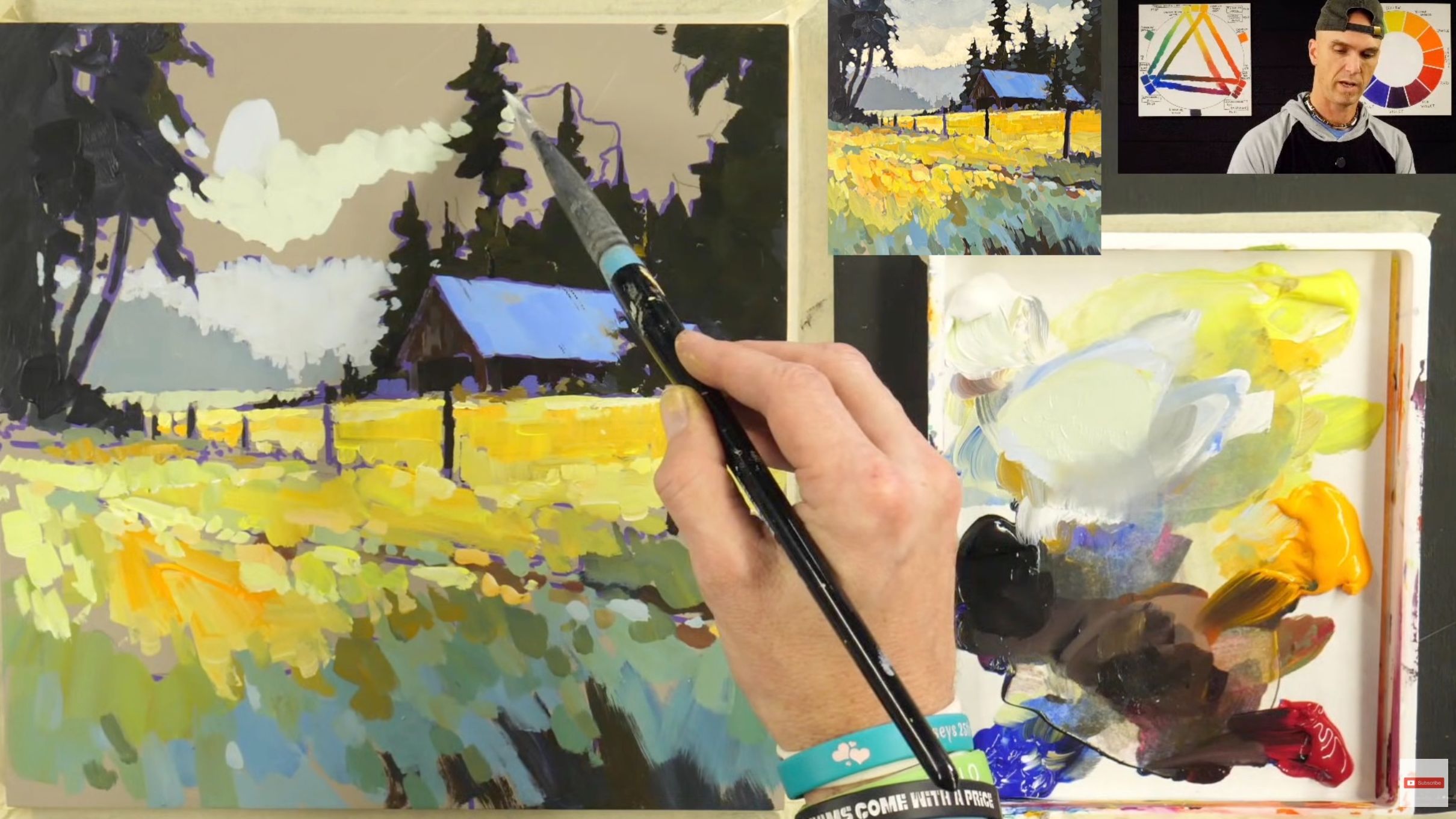
A Step-by-Step Painting Tutorial: From Sketch to Stunning Landscape
To create a landscape painting from scratch, start with a simple sketch on a gray-toned canvas, then build your painting in layers — beginning with the darkest values and working toward midtones, highlights, and details. Using a limited color palette and basic brushes, beginners can complete a stunning landscape in about an hour.
If you’ve ever wanted to create a beautiful painting from scratch but didn’t know where to begin, this tutorial breaks it down into a fun, approachable process you can complete in about an hour and fifteen minutes. Whether you’re a beginner or just looking for a relaxing creative session, this guide walks you through every essential step—from the initial sketch to the final brushstroke.
Materials Used:
Canvas: Toned neutral gray canvas panel.
Brushes: Princeton Aspen Flats (Sizes 20, 12, 10, and 6). Learn more about why Jed loves flat brushes here!
Colors: Titanium White, Cadmium Yellow Light, Cadmium Orange, Quinacridone Red, Ultramarine Blue, and Mars Black.
✏️ The Sketch: Building the Foundation
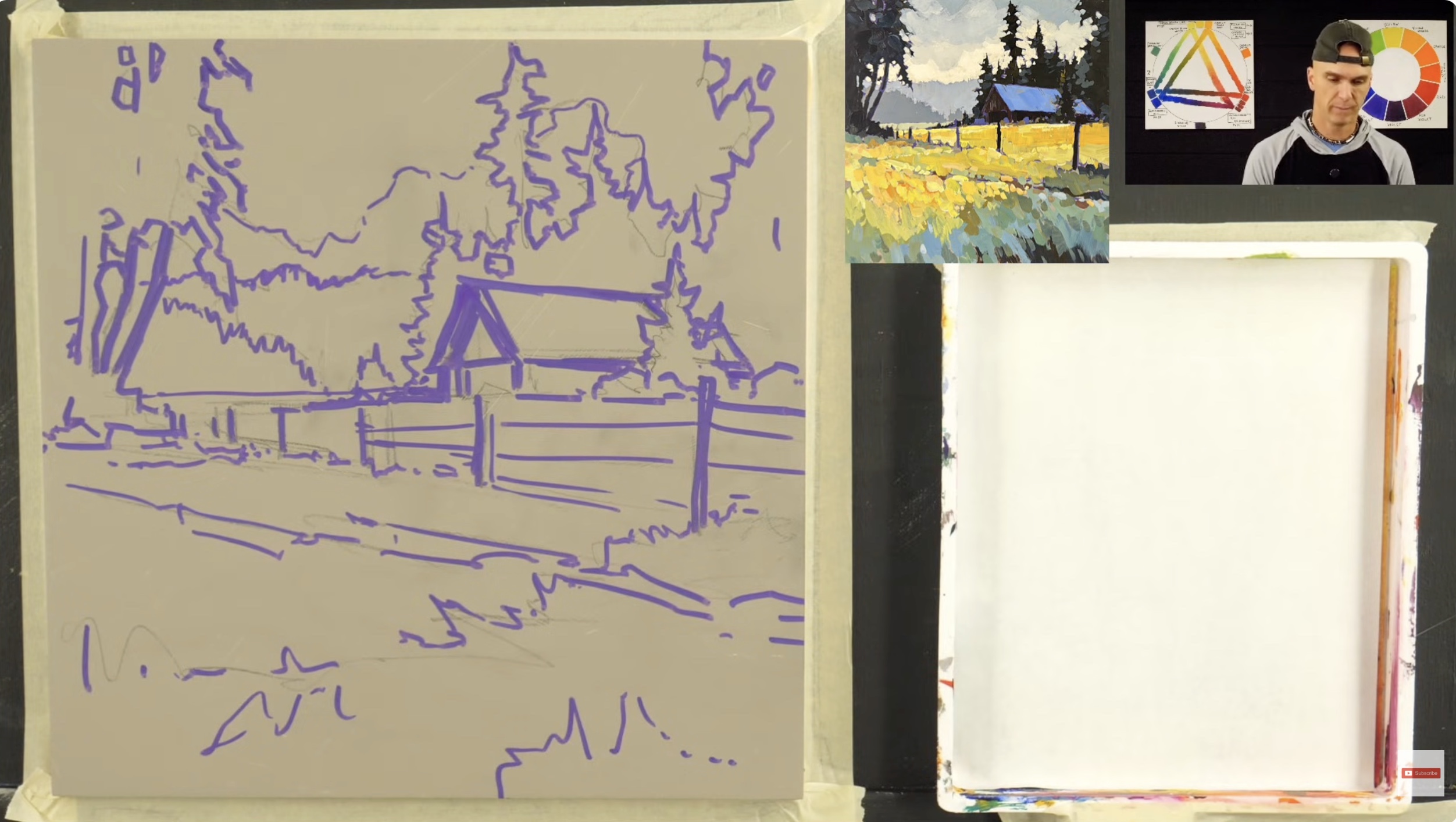
The initial drawing outlines the key elements of the landscape:
-
Soft, flowing clouds
-
A calm sky
-
A background hill that adds depth
- Barns
- Trees
Sketch doesn’t need to be perfect. Minor corrections are normal, and the goal is simply to create a clear enough guide to follow while painting.
🎨 Choosing Colors: Keeping It Simple
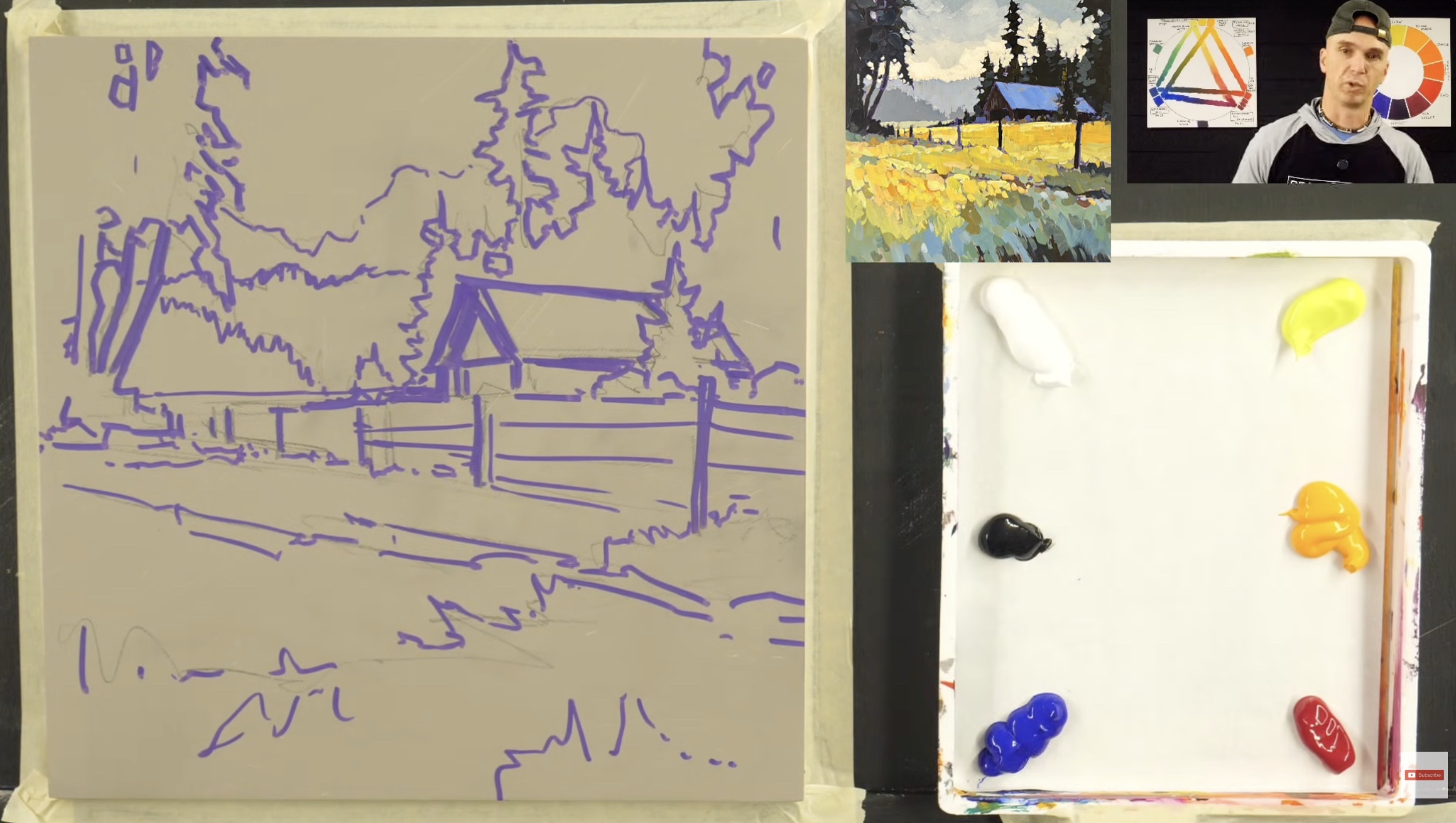
Use a simplified color palette. This makes the process more accessible and less intimidating, especially for beginners.
One of the first colors introduced is titanium white, which will play a key role in building the lighter areas of the painting, particularly in the sky and clouds.
🖌️ The Painting Process: Embracing the Mess
Once painting begins, the clean sketch starts to disappear under layers of color—and that’s completely okay. Things may look messy at first, but this is a natural part of the process.
The painting develops gradually:
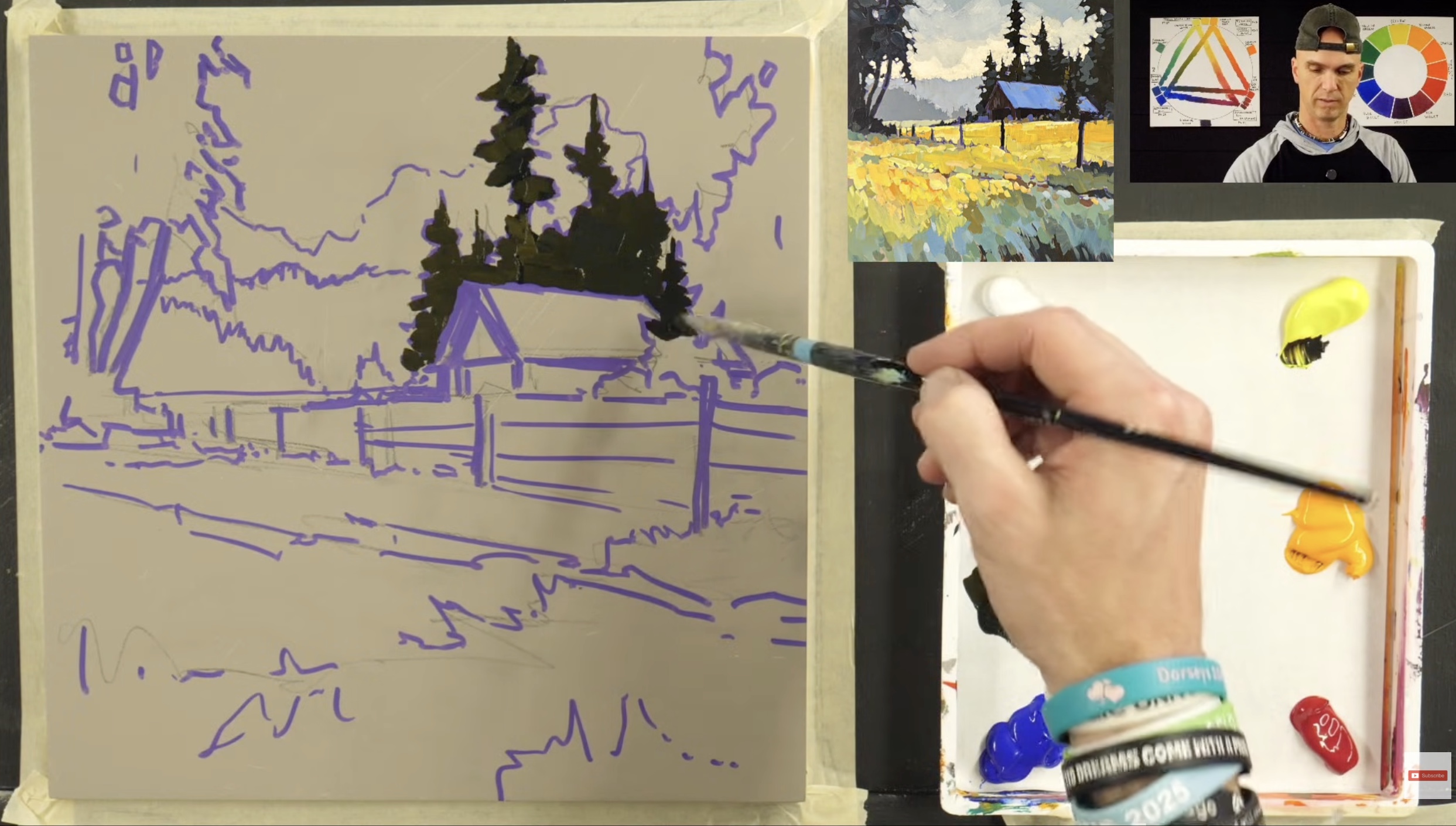
- Laying in the Darkest Values
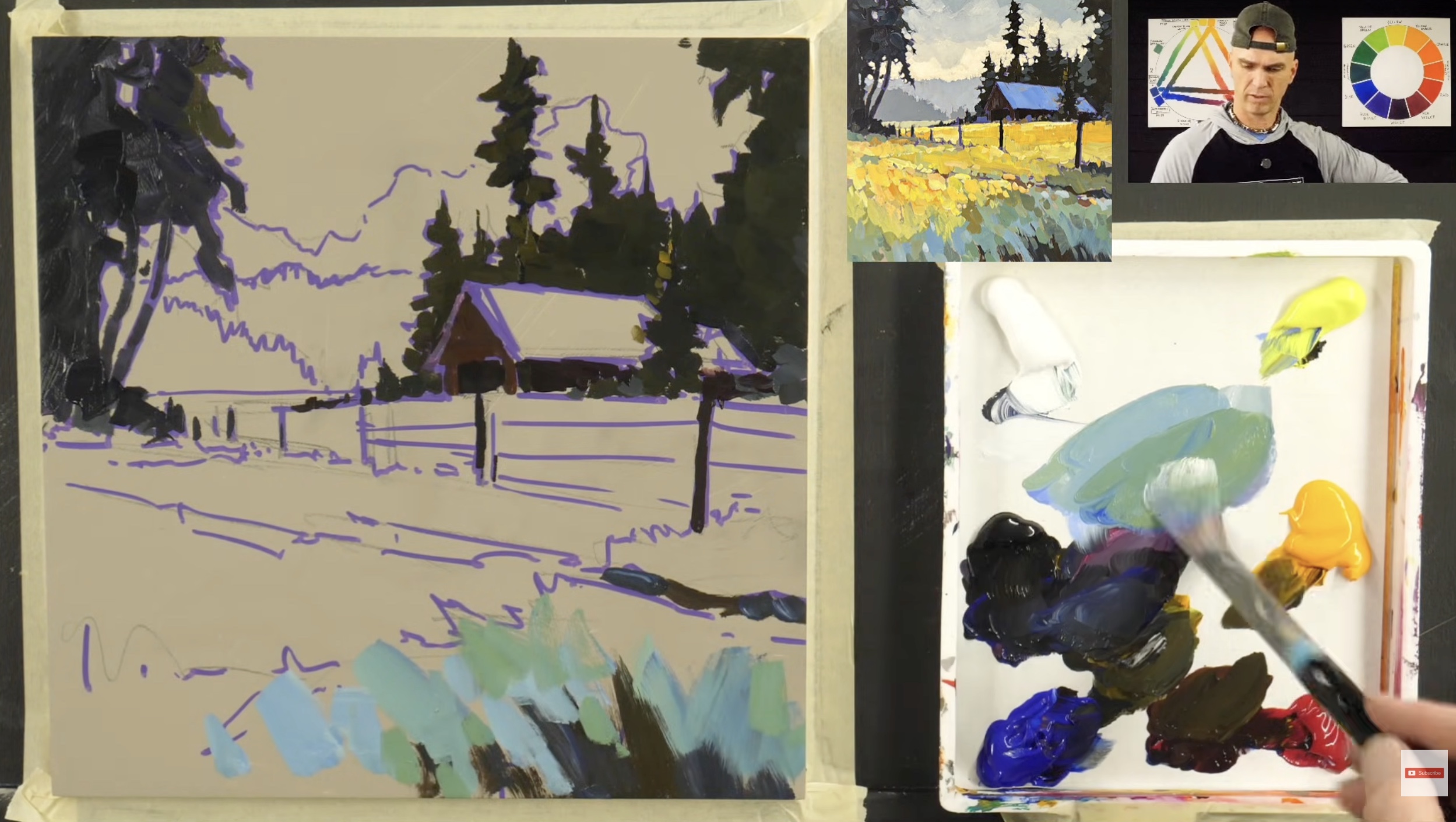
- Building Mid-tones & Field Textures
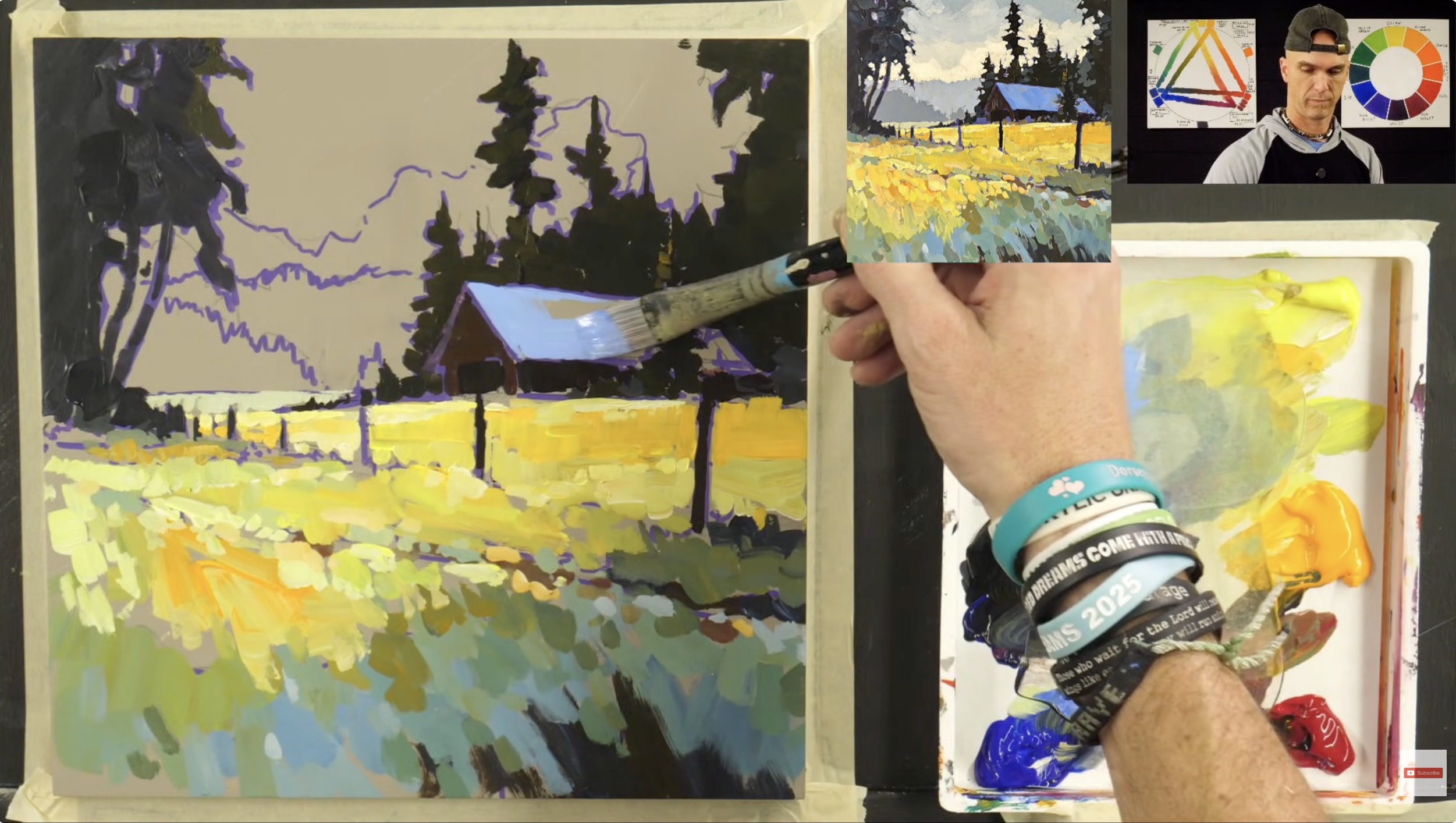
- Painting the Barn & Blue Roof
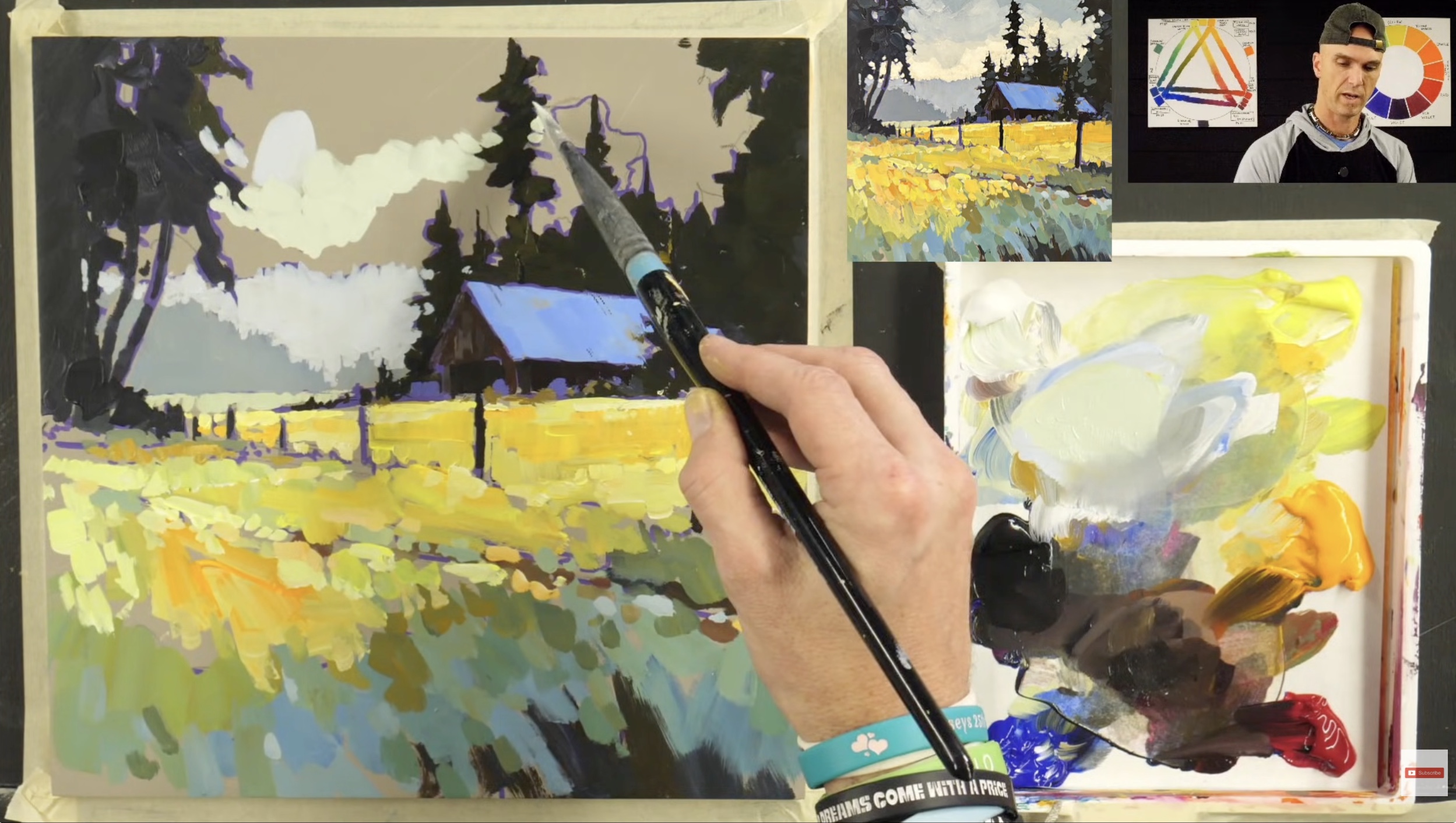
- Shaping the Sky & Clouds
Each layer builds on the last, slowly transforming the rough sketch into a cohesive and visually pleasing scene.
🌄 Key Takeaways
-
Start simple: A basic sketch and limited palette go a long way.
-
Don’t fear mistakes: Adjustments and imperfections are part of the journey.
-
Trust the process: Early stages may look messy, but persistence pays off.
-
Have fun: Creativity thrives when you enjoy what you’re doing.
🎉 Final Thoughts
Painting doesn’t have to be complicated to be beautiful. With a clear plan, a few essential colors, and a willingness to experiment, anyone can create a stunning piece of art in a relatively short time.
So grab your brushes, set down perfectionism, and dive into the joy of painting—you might surprise yourself with what you can create.