Vibrant Mountain Landscape in Acrylics | Full Tutorial for Beginners | For the Love of Painting
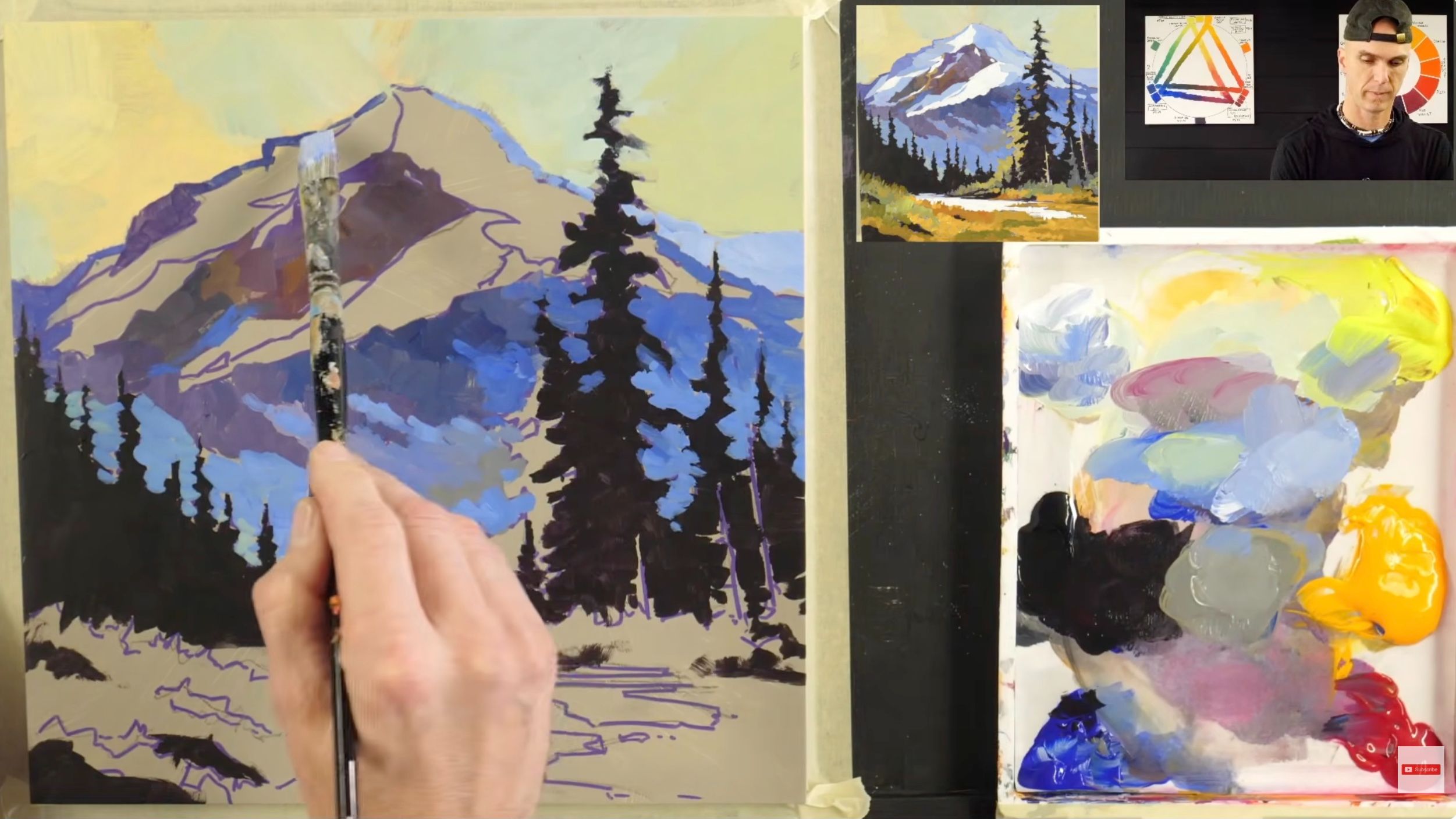
Painting a Vibrant Mountain Landscape: A Journey Through Color and Imagination
There’s something deeply calming—and exciting—about painting landscapes. Today, we’re diving into a vibrant mountain scene filled with bold colors, intentional brushstrokes, and a touch of imagination.
Whether you’re a beginner or someone rediscovering your creative side, this process is all about enjoying the journey as much as the final piece.
Starting with Intention
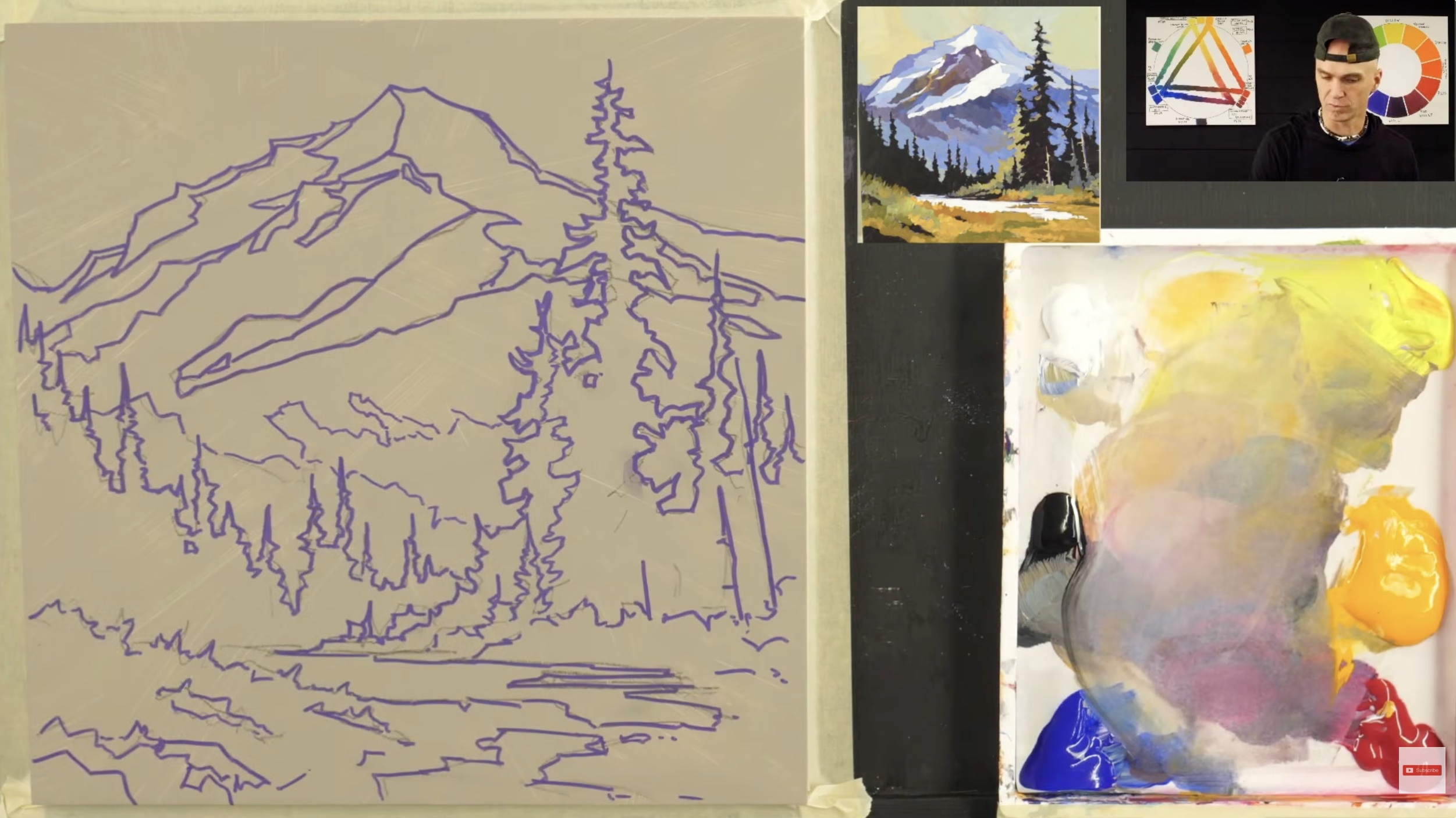
Before even picking up a brush, take a moment to sketch your composition. This gives you a roadmap and helps you feel more confident as you begin.
To learn more about composition, CLICK HERE
For this painting, the palette includes:
-
Titanium white
-
Cadmium yellow light
-
Cadmium orange
-
Quinacridone red
-
Ultramarine blue
-
Mars black
These colors create a rich foundation for both vibrant highlights and deep, moody shadows.
Why You Should Start with the Darks
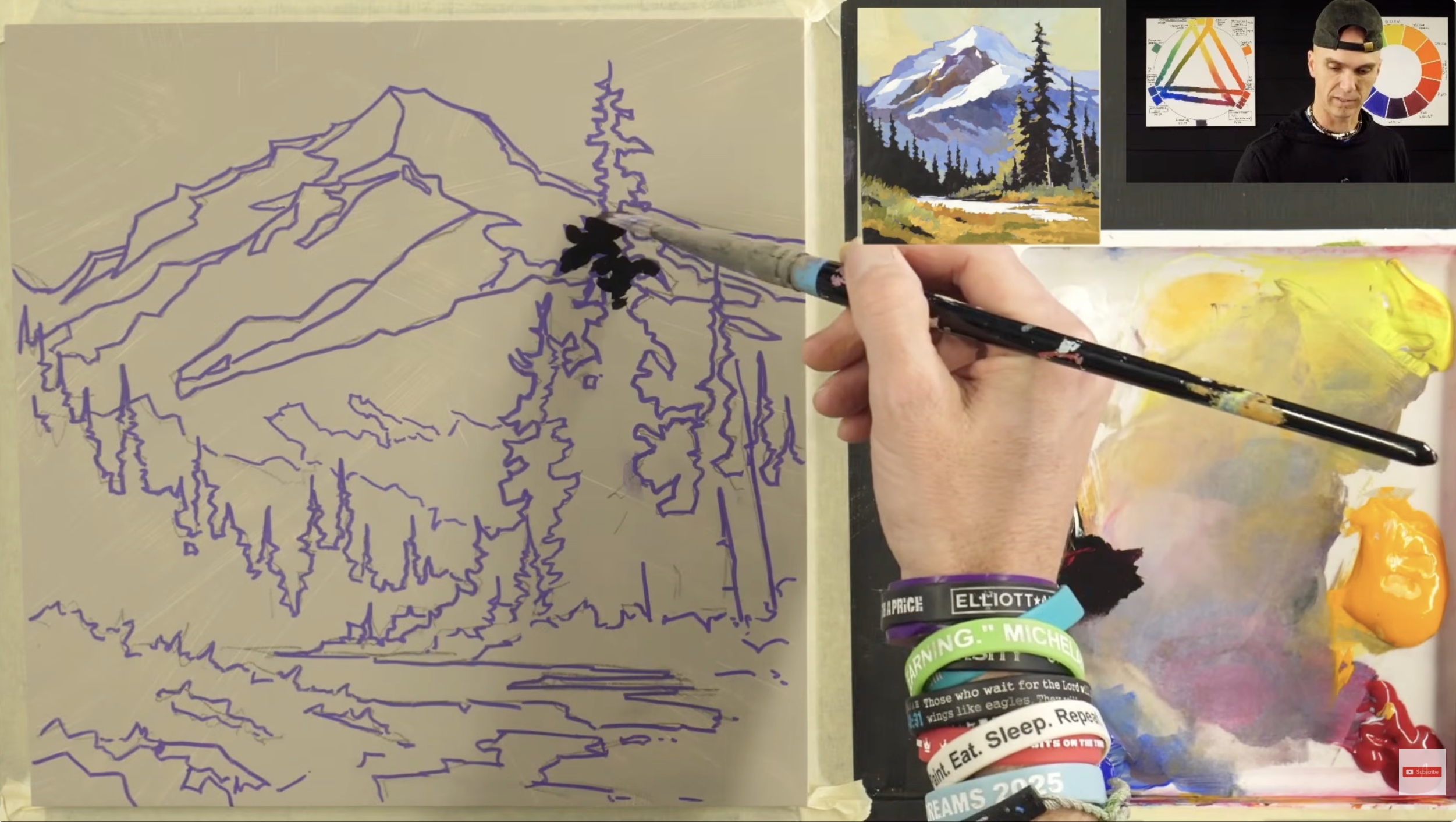
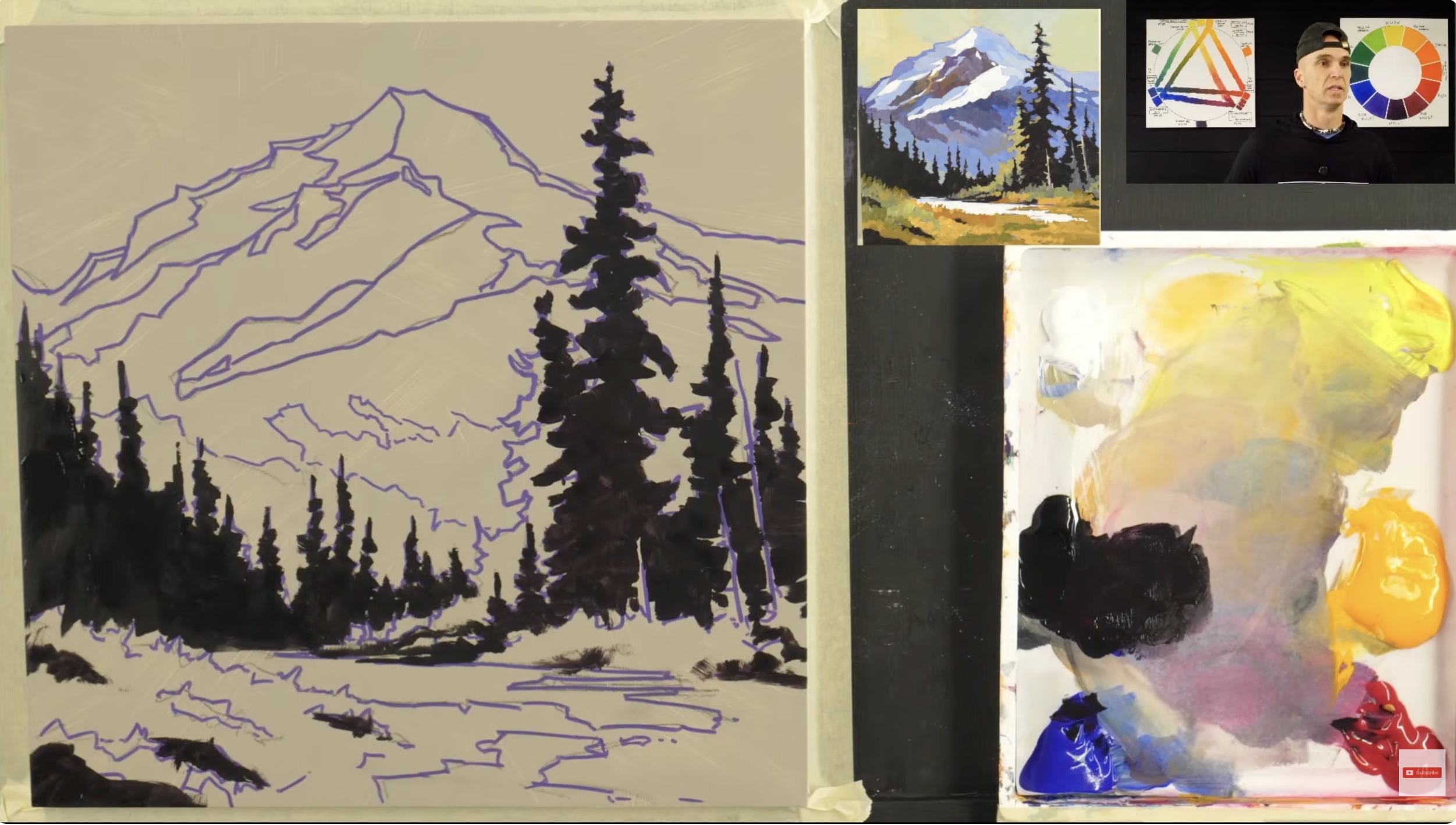
One of the most important techniques in this painting is starting with the darkest areas.
Why?
Because dark tones act as the foundation. They sit underneath everything else—your midtones and highlights—and allow those brighter colors to truly stand out.
In this scene, the darkest elements are the trees. By blocking these in early, you establish depth and contrast right away.
A helpful tip:
You don’t have to use black straight from the tube. Many artists prefer mixing their own blacks using colors like red and blue. But there’s no strict rule—adding a bit of color into black works just as well and keeps things simple.
Let Your Brush Tell a Story
As you paint, don’t just focus on technique—immerse yourself in the scene.
Imagine you’re actually there:
-
Walking through the mountains
-
Feeling the crisp air
-
Surrounded by towering trees
Maybe you’re on a hike with people you love. Maybe you stumble upon wild berries along the trail.
This kind of imagination doesn’t just make painting more enjoyable—it adds emotion and authenticity to your work.
Building Layers: Darks, Midtones, and Lights
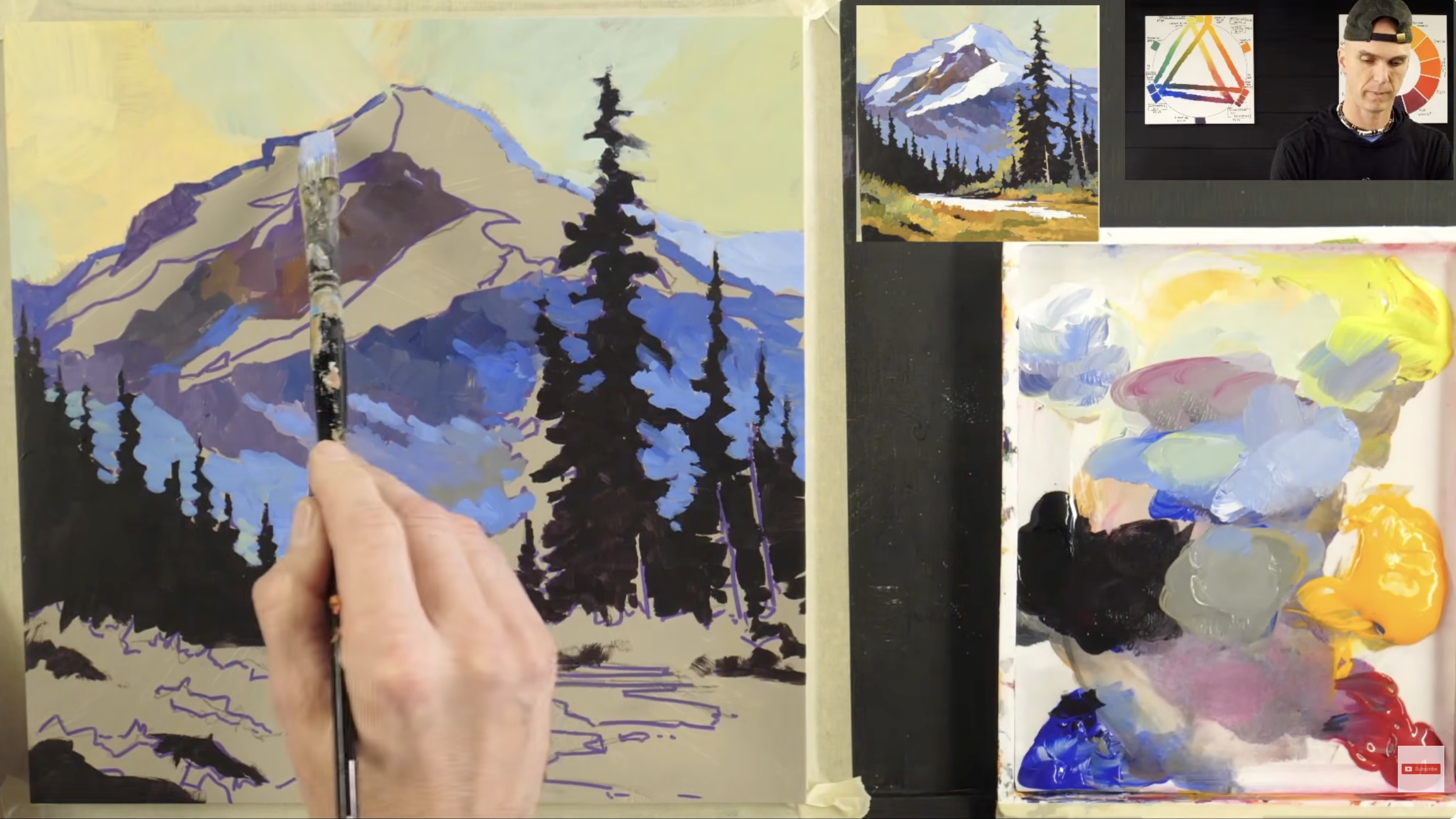
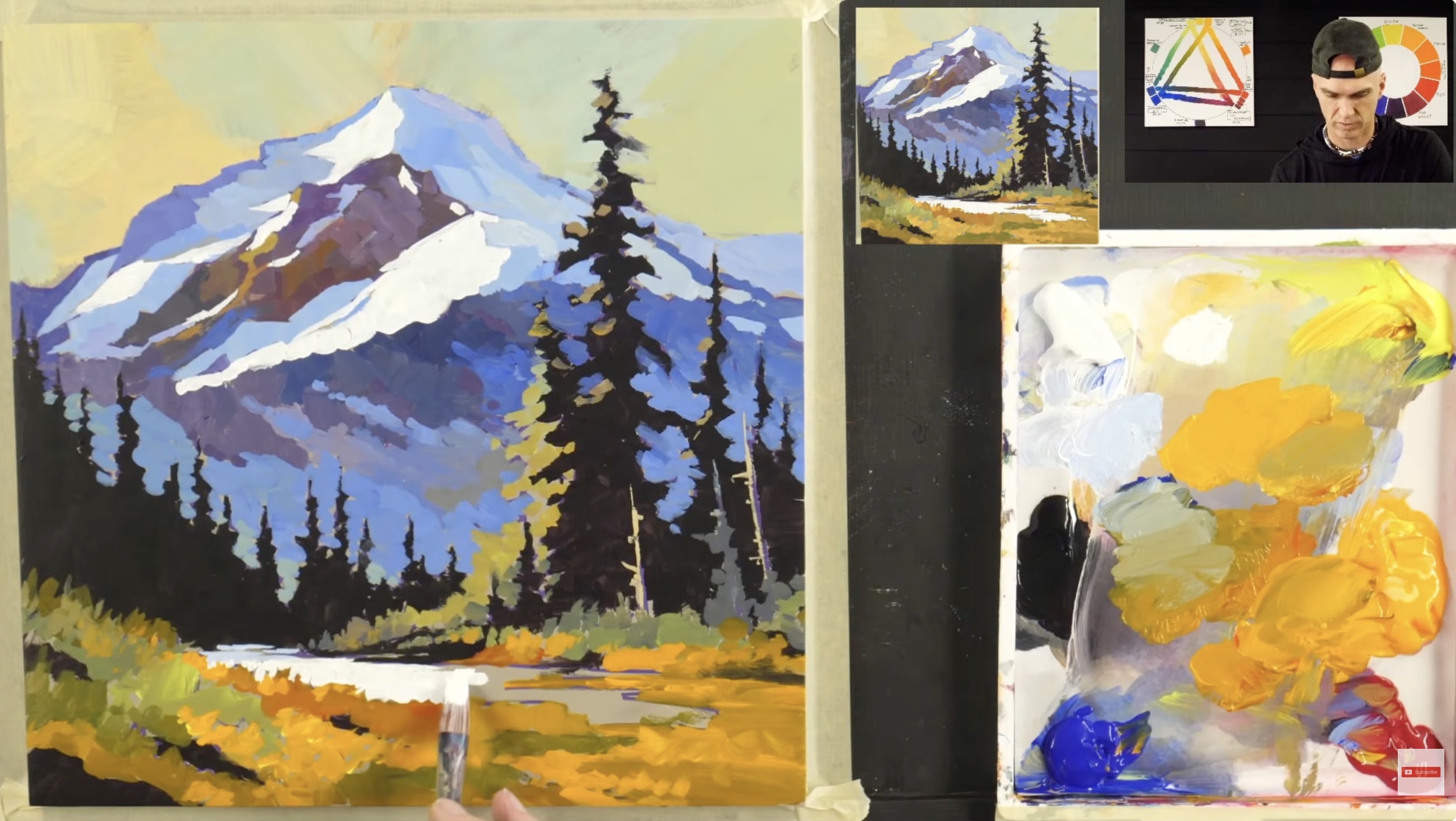
Once your dark areas are in place, you can begin layering:
-
Darks first – thin and foundational
-
Midtones next – build form and color variation
-
Lights last – bring the painting to life
This layering technique creates contrast and ensures that your highlights truly pop. Without a strong dark base, even the brightest colors can look flat.
Embrace the Process
Painting isn’t about perfection—it’s about exploration.
You might experiment with color mixing. You might adjust shapes as you go. You might even change the mood of the entire scene halfway through.
And that’s okay.
What matters is that you stay present, enjoy each brushstroke, and allow yourself to be creative.
Final Thoughts
This mountain landscape isn’t just a painting—it’s an experience.
From establishing deep shadows to imagining a peaceful hike through nature, every step adds meaning to your work.
So the next time you pick up a brush, remember:
-
Start with your darks
-
Build your layers thoughtfully
-
And most importantly—have fun with it
Because sometimes, the best part of painting isn’t the finished piece… it’s the journey you take to get there.