Beautiful Hillside Hike Landscape in Acrylics | Full Tutorial | For the Love of Painting
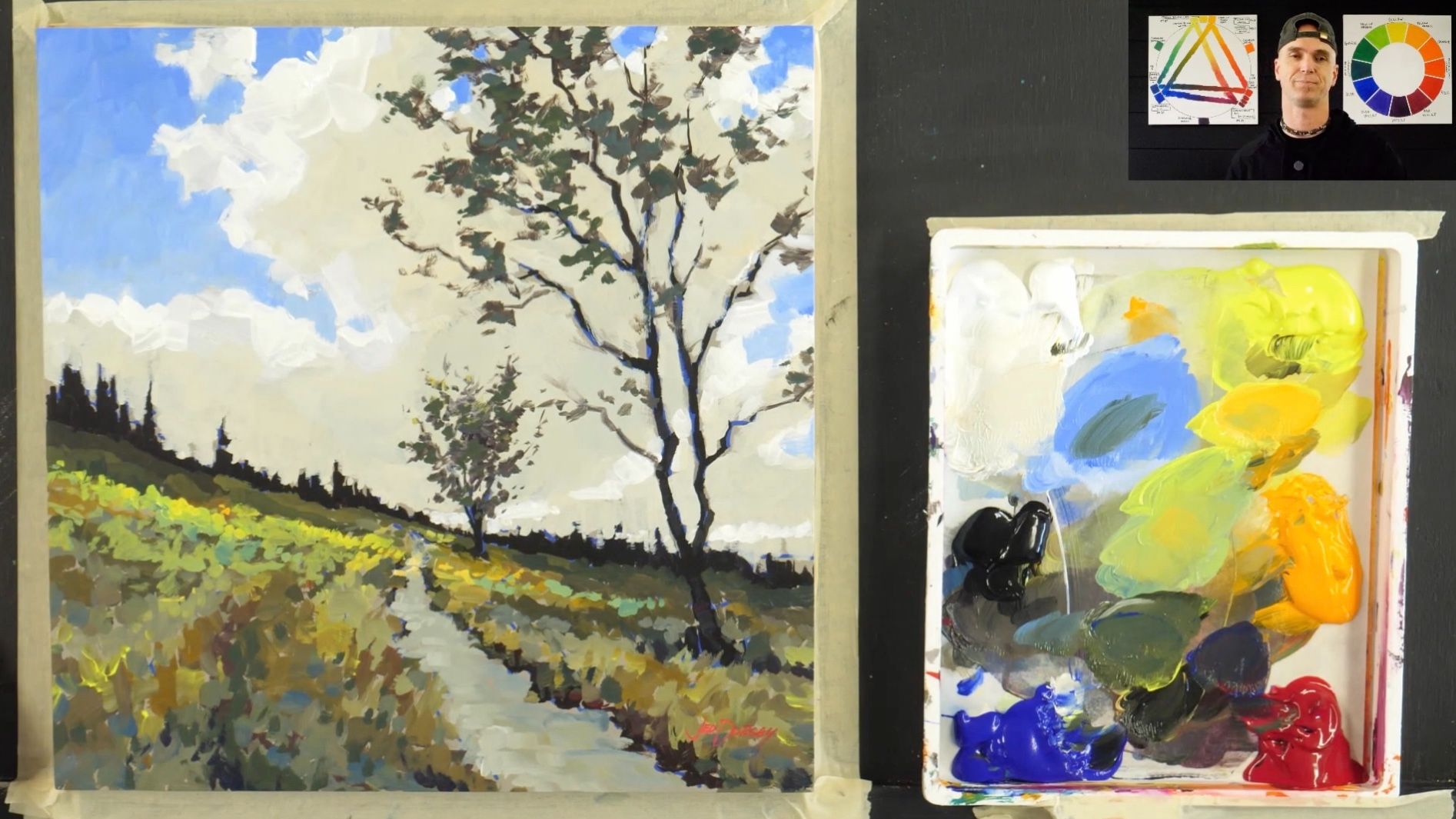
Painting a Gorgeous Hillside Landscape: A Beginner-Friendly Guide
There’s something deeply satisfying about bringing a landscape to life on canvas—especially when you approach it with intention, simplicity, and the right techniques. In this tutorial, we walk through how to paint a beautiful hillside scene while building foundational skills like color mixing, brushwork, and composition.
Setting the Stage: Preparing Your Canvas
Before the first brushstroke even touches the surface, preparation matters.
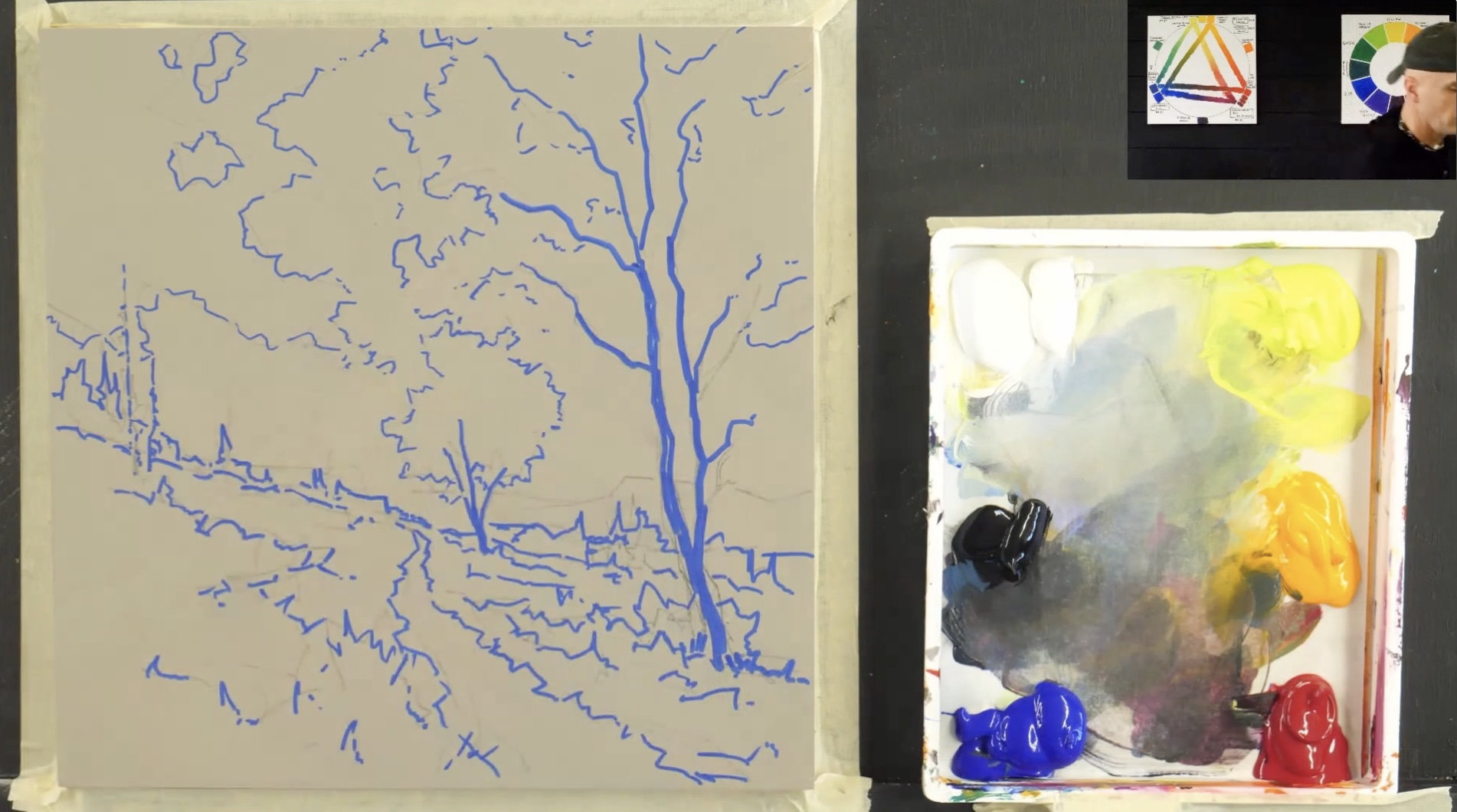
Start with a gray-toned canvas. This neutral base helps balance values and makes it easier to judge both light and dark areas as your painting develops.
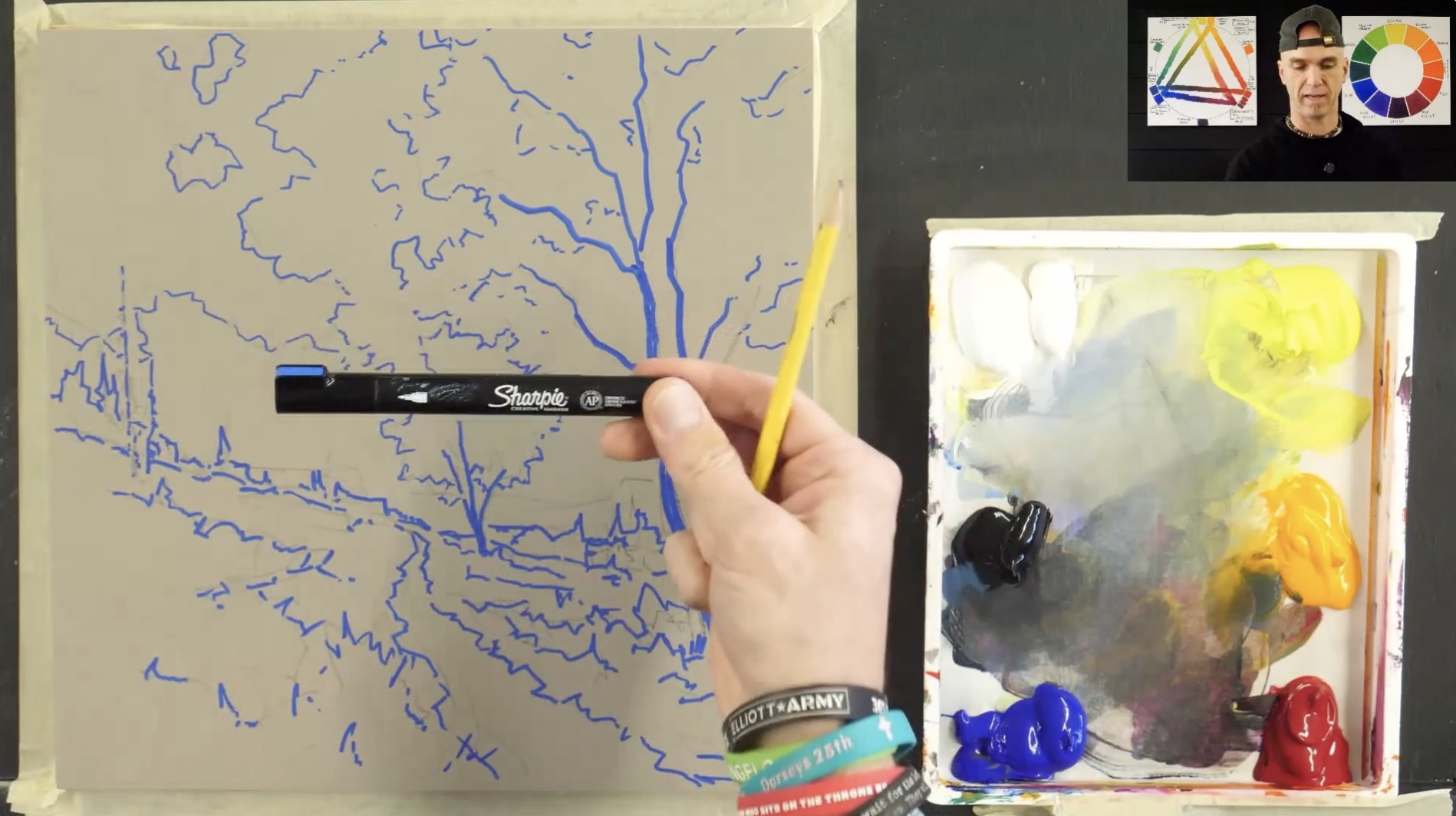
Next, sketch your composition. A helpful tip is to first draw with pencil, then trace over it using a water-based acrylic marker (not a regular permanent marker). This step is crucial because:
-
Pencil alone can smudge or disappear when layered with wet paint.
-
A water-based acrylic marker will stay intact under washes and glazes.
-
It preserves your composition even as you build layers.
This small preparation step can save you from losing your structure midway through the painting.
Starting Strong: Focus on the Darks
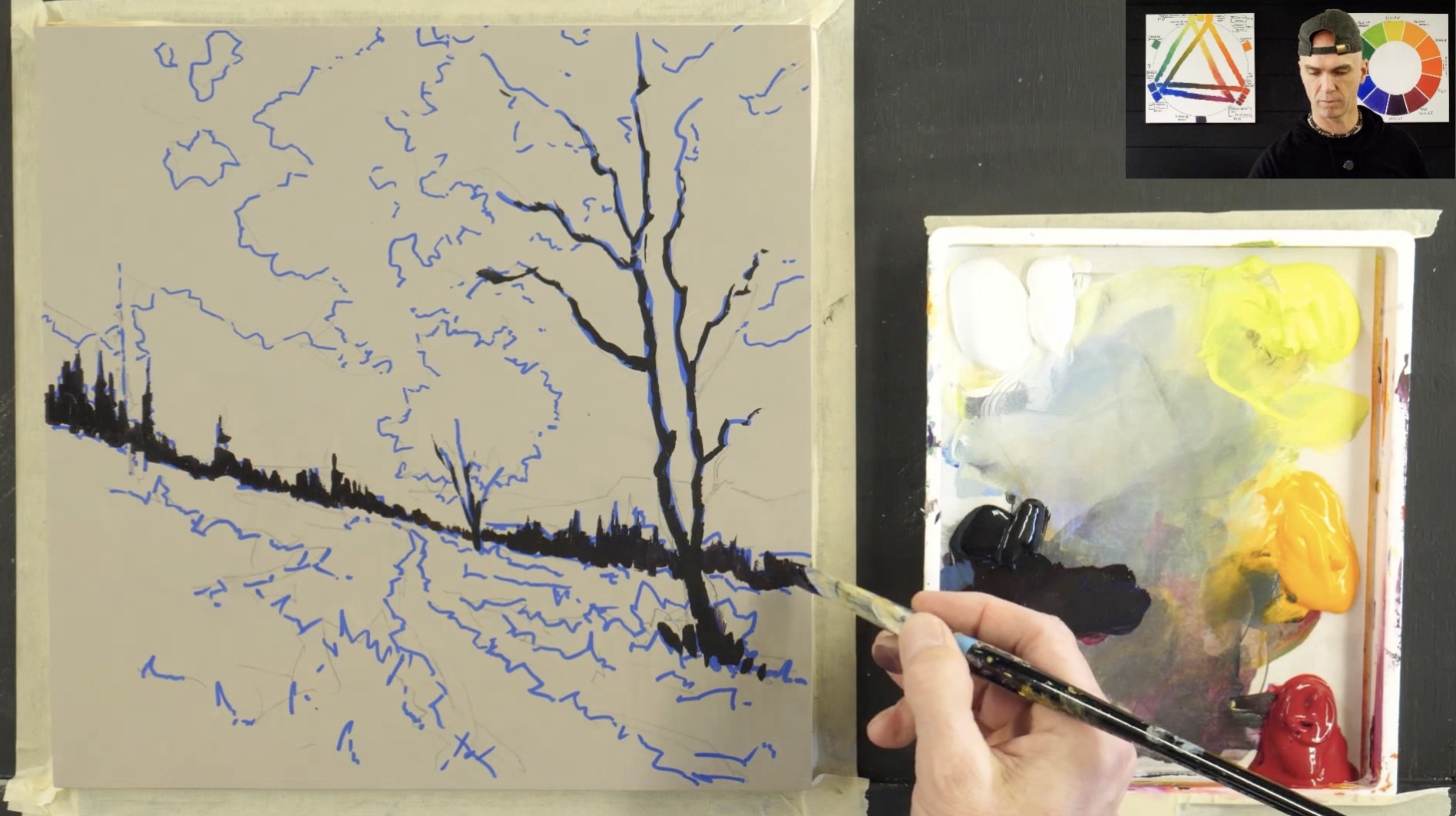
When beginning the painting process, resist the urge to jump straight into details or highlights. Instead, start with the dark values.
Why?
-
Establishing dark areas first creates contrast.
-
It gives your painting depth from the beginning.
-
Everything else—midtones and highlights—will fall into place more naturally.
Think of this stage as building the foundation of your painting.
The Core Skills You’ll Develop
This exercise isn’t just about finishing a landscape—it’s about improving as an artist. Along the way, you’ll practice:
1. Color Mixing
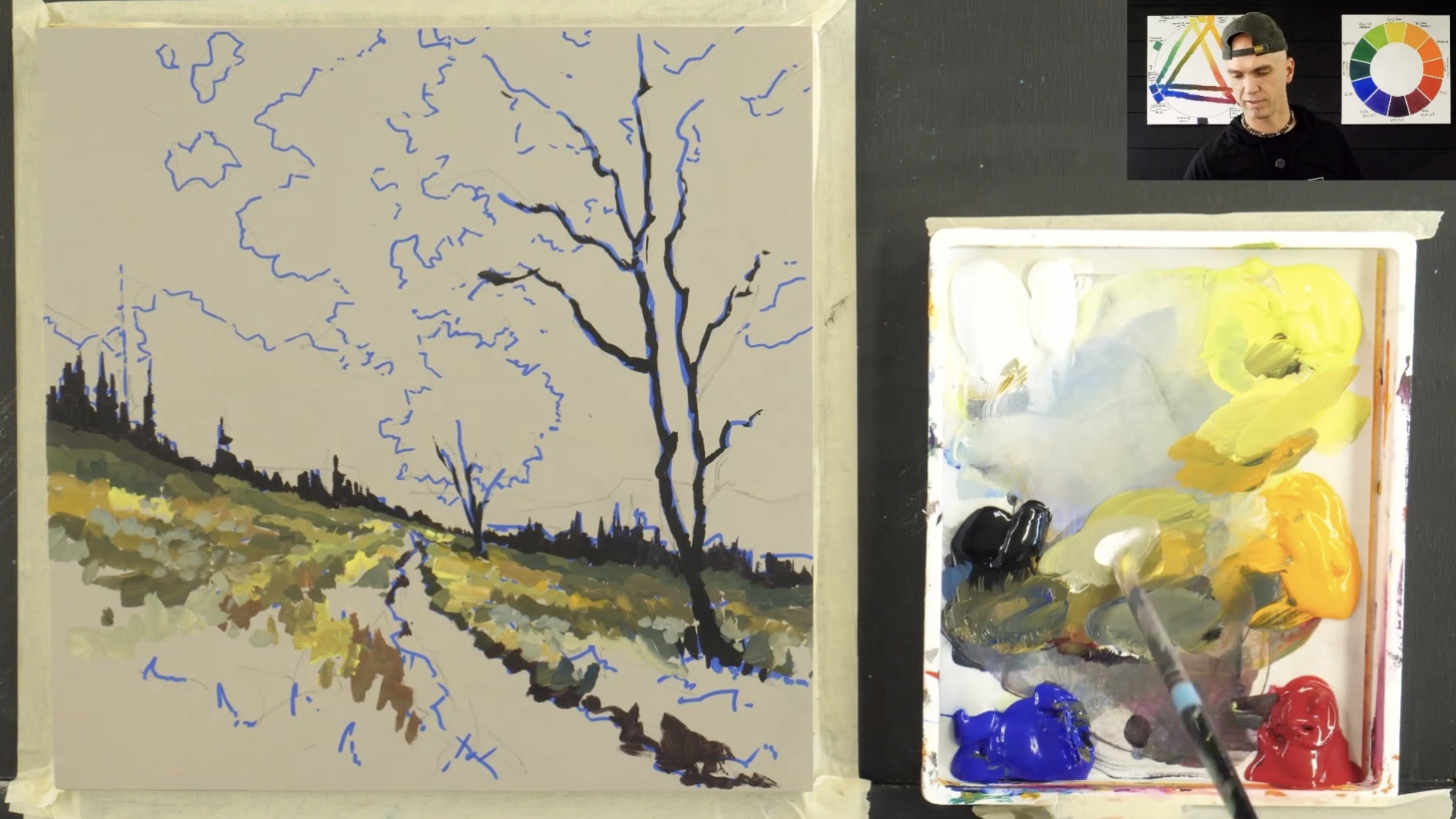
Understanding how colors interact is key. You’ll learn how to:
-
Create natural-looking tones
-
Adjust warmth and coolness
-
Avoid muddy colors
2. Intentional Brush Strokes
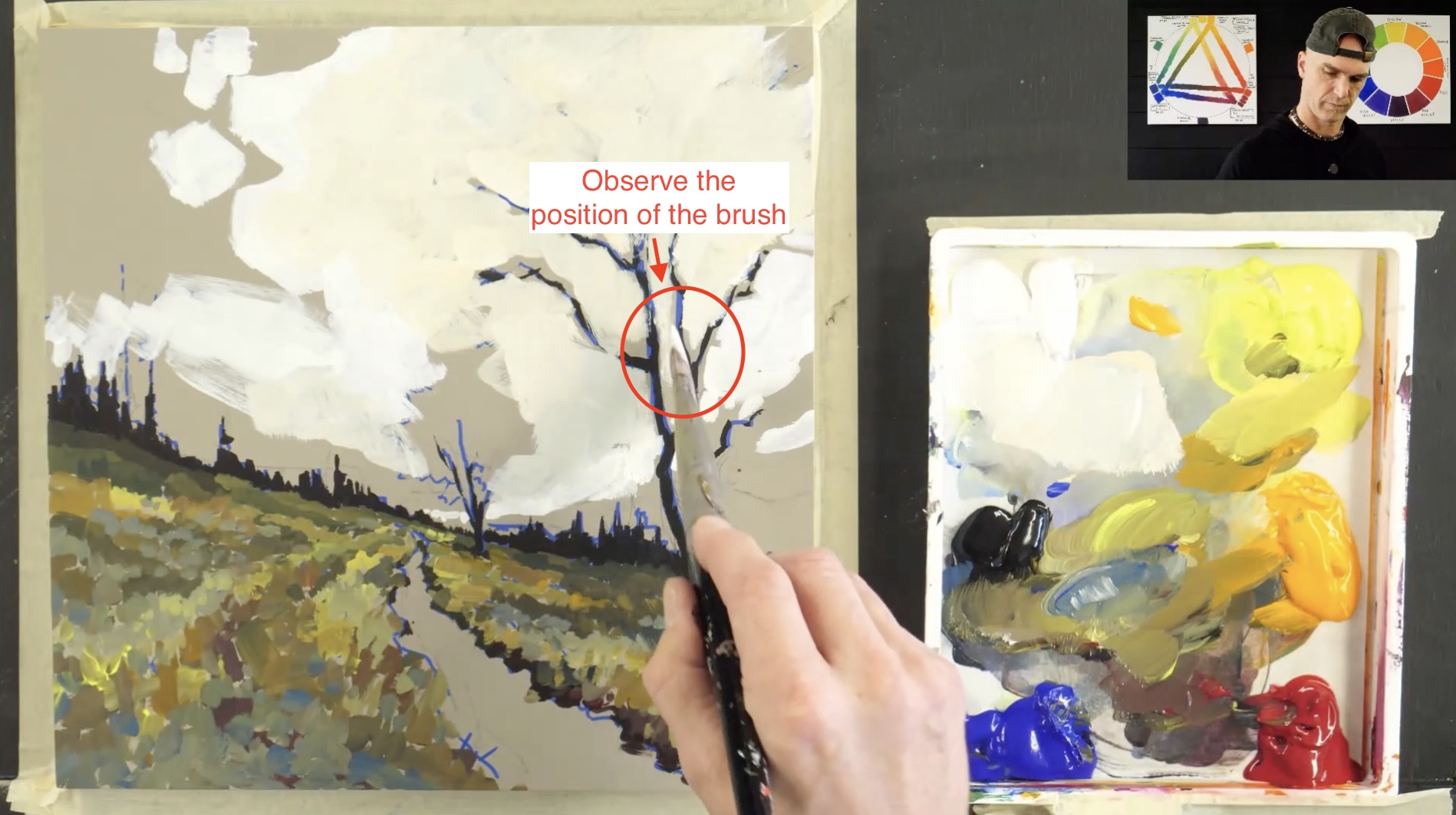
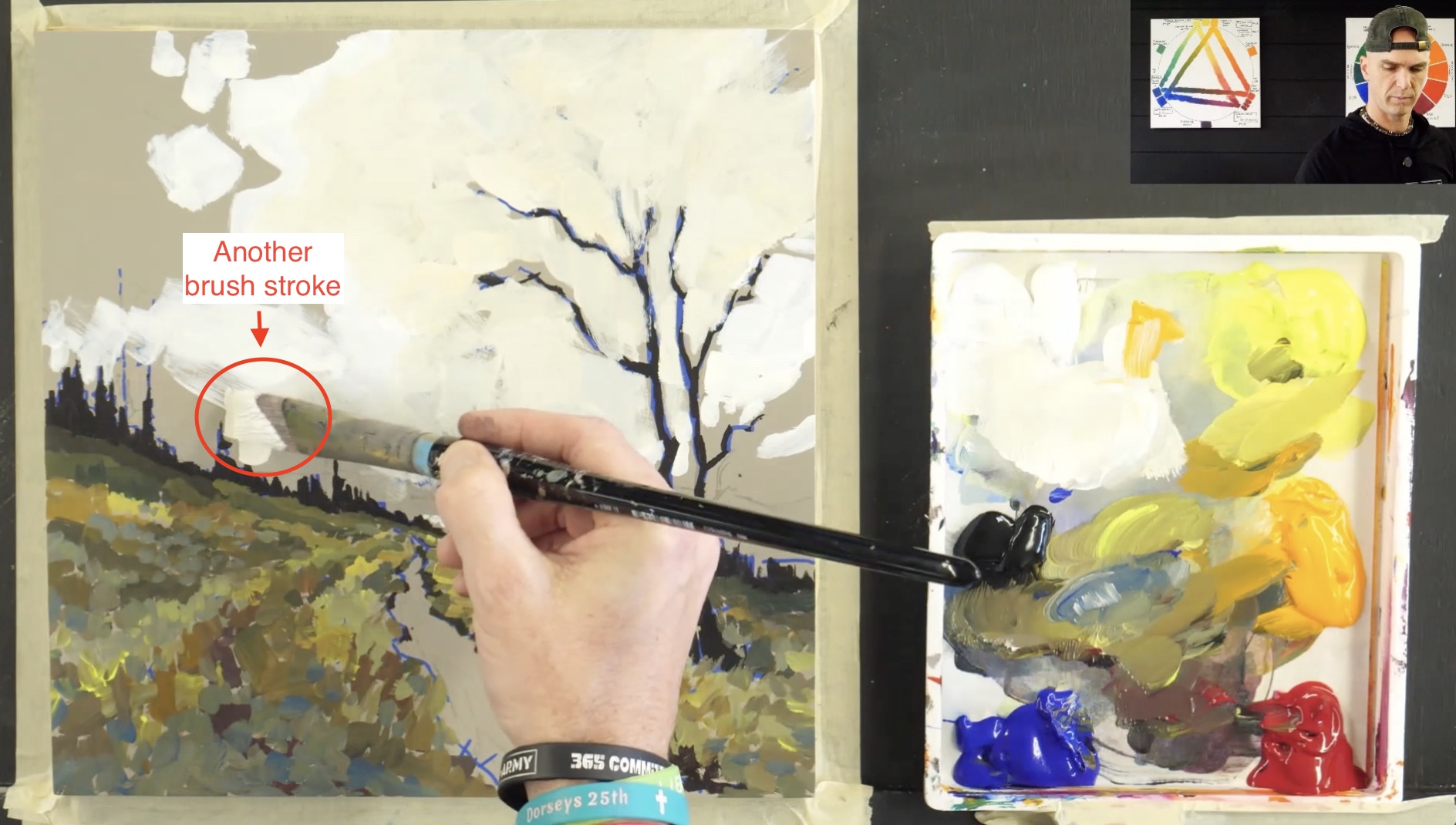
Each stroke should have a purpose. Rather than overworking the canvas:
-
Use confident, deliberate motions
-
Let your brushwork suggest texture and form
3. Composition
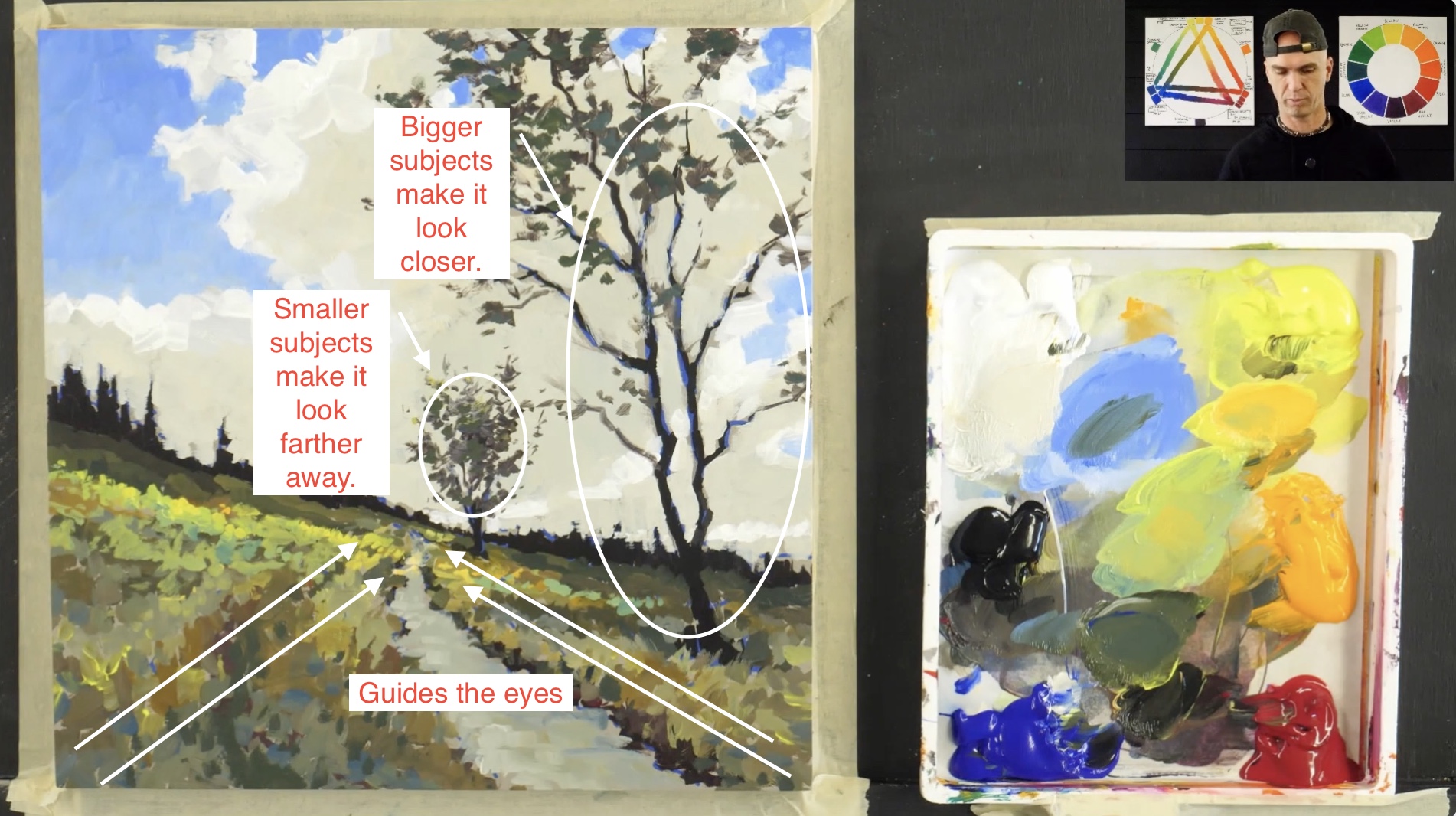
A strong composition guides the viewer’s eye. Even in a simple hillside scene, placement matters:
-
Balance shapes and values
-
Lead the eye through the landscape
-
Create a sense of harmony
Keep It Simple and Enjoyable
The goal of this process is not perfection—it’s confidence and clarity.
By breaking the painting into manageable steps and focusing on fundamentals, you can:
-
Feel more in control of your work
-
Understand why each step matters
-
Actually enjoy the painting process
Final Thoughts
Painting a hillside landscape doesn’t have to be overwhelming. With a prepared canvas, a solid sketch, and a focus on dark values first, you set yourself up for success.
Take your time, trust the process, and remember: every brushstroke is a step forward in your artistic journey.