Painting the Perfect Sunset Glow | Saguaro Desert Full Tutorial | For The Love Of Painting
Ready to Paint a Beautiful Desert Sunset?
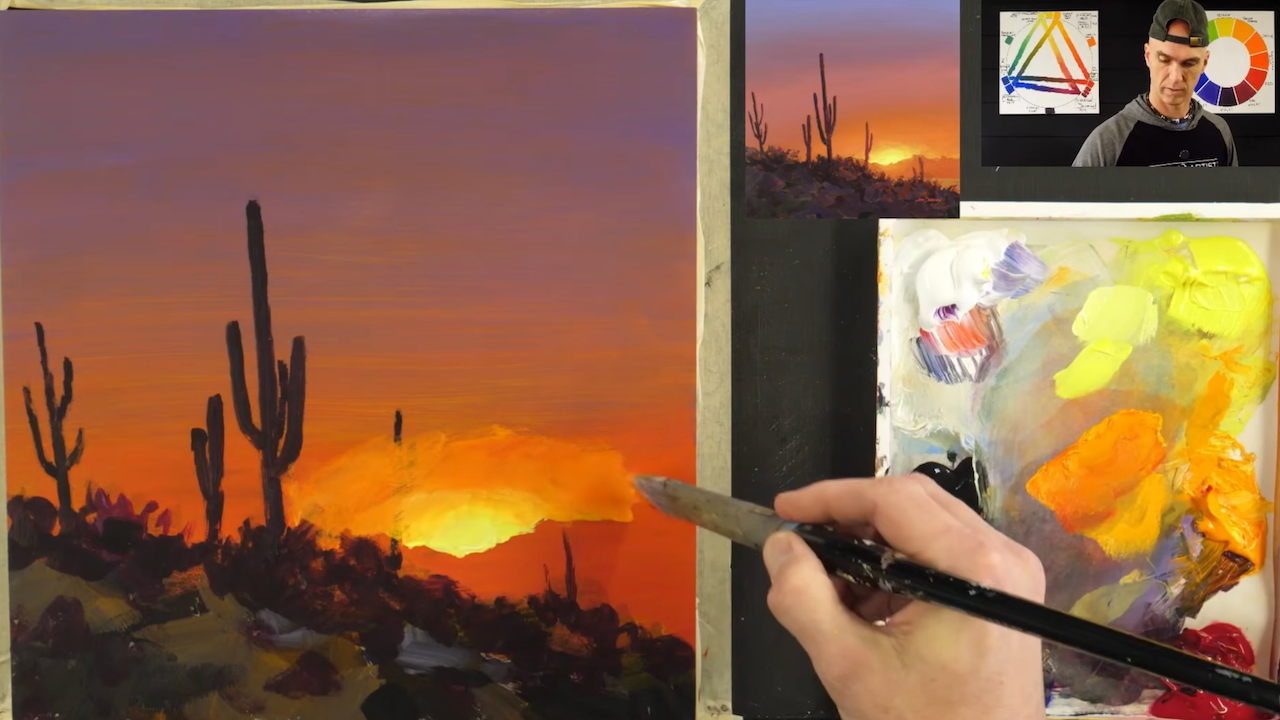
To paint a desert sunset, start by blocking in dark foreground silhouettes like cacti, then build a vibrant sky gradient using yellows, oranges, reds, and blues. Blend colors softly from warm tones near the horizon to cool tones above. The contrast between the glowing sky and dark foreground creates the dramatic effect.
If you've ever wanted to create a stunning desert landscape painting but felt intimidated, this guide will show you just how simple—and enjoyable—it can be. In this tutorial-inspired walkthrough, we focus on building a dramatic contrast between a dark foreground and a vibrant, glowing sky.
Why This Painting Is Perfect for Beginners
This painting approach is designed with simplicity in mind. By focusing on layering and color blending (learn more about brushstroke techniques here) rather than intricate details, even beginners can achieve a visually striking result. The main idea is to create depth using silhouettes and a smooth gradient sky.
Materials You’ll Need
You don’t need a complicated setup to get started. Here are the basic colors used:
-
Titanium White
-
Cadmium Yellow Light
-
Quinacridone Red
-
Ultramarine Blue
-
Mars Black
-
Cadmium Orange (optional – you can mix red and yellow instead)
You can paint on a toned panel (gray works well), but a plain canvas will also do just fine.
Step 1: Start with the Foreground
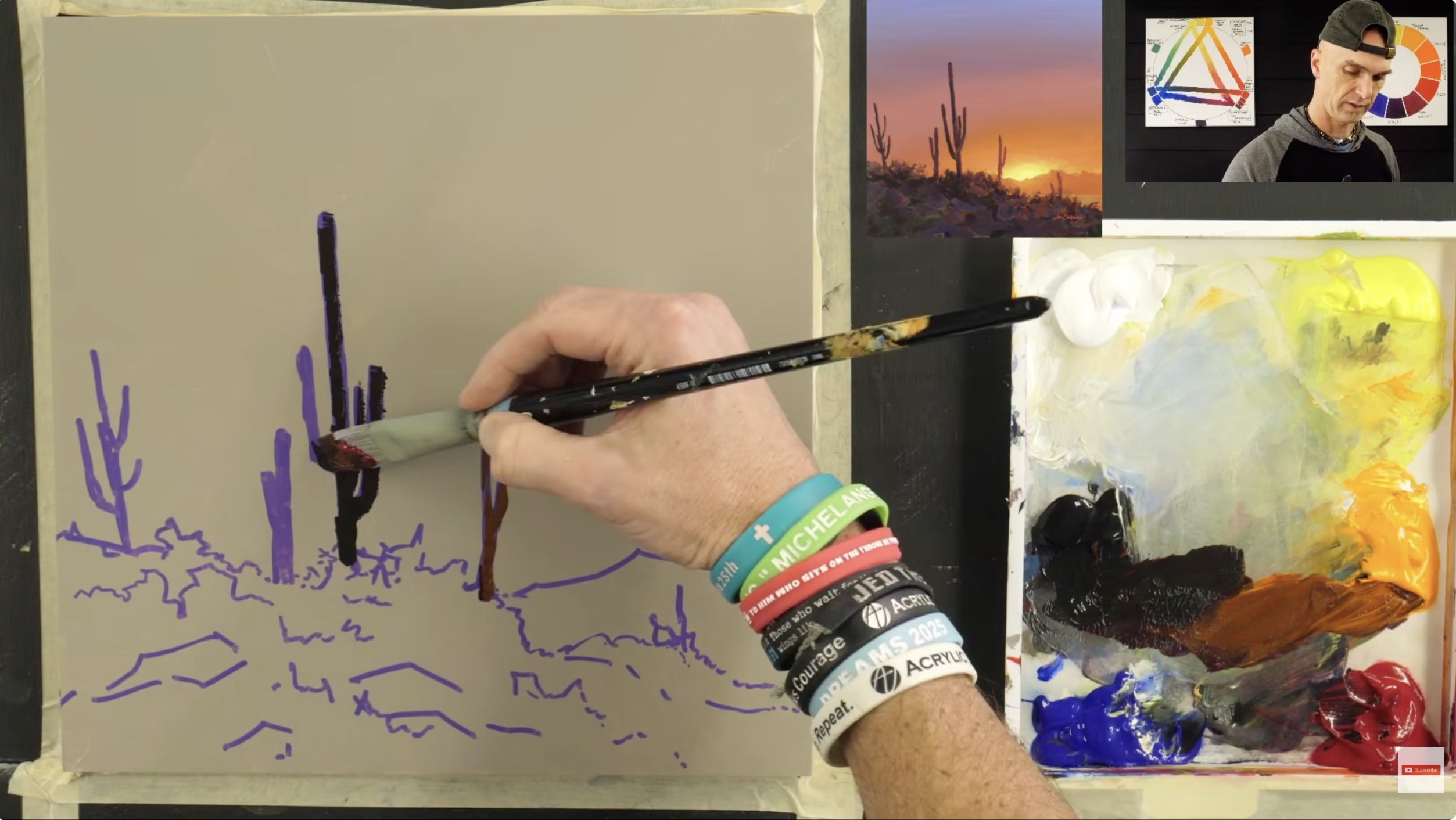
Begin by establishing the darkest parts of your painting—the foreground. This typically includes silhouettes such as cacti or desert plants. Using a dark mixture (often black or a blend with blue), block in these shapes early.
Don’t worry about details at this stage. The goal is to create strong, bold shapes that will contrast beautifully with the sky later on.
Step 2: Build the Sky Gradient
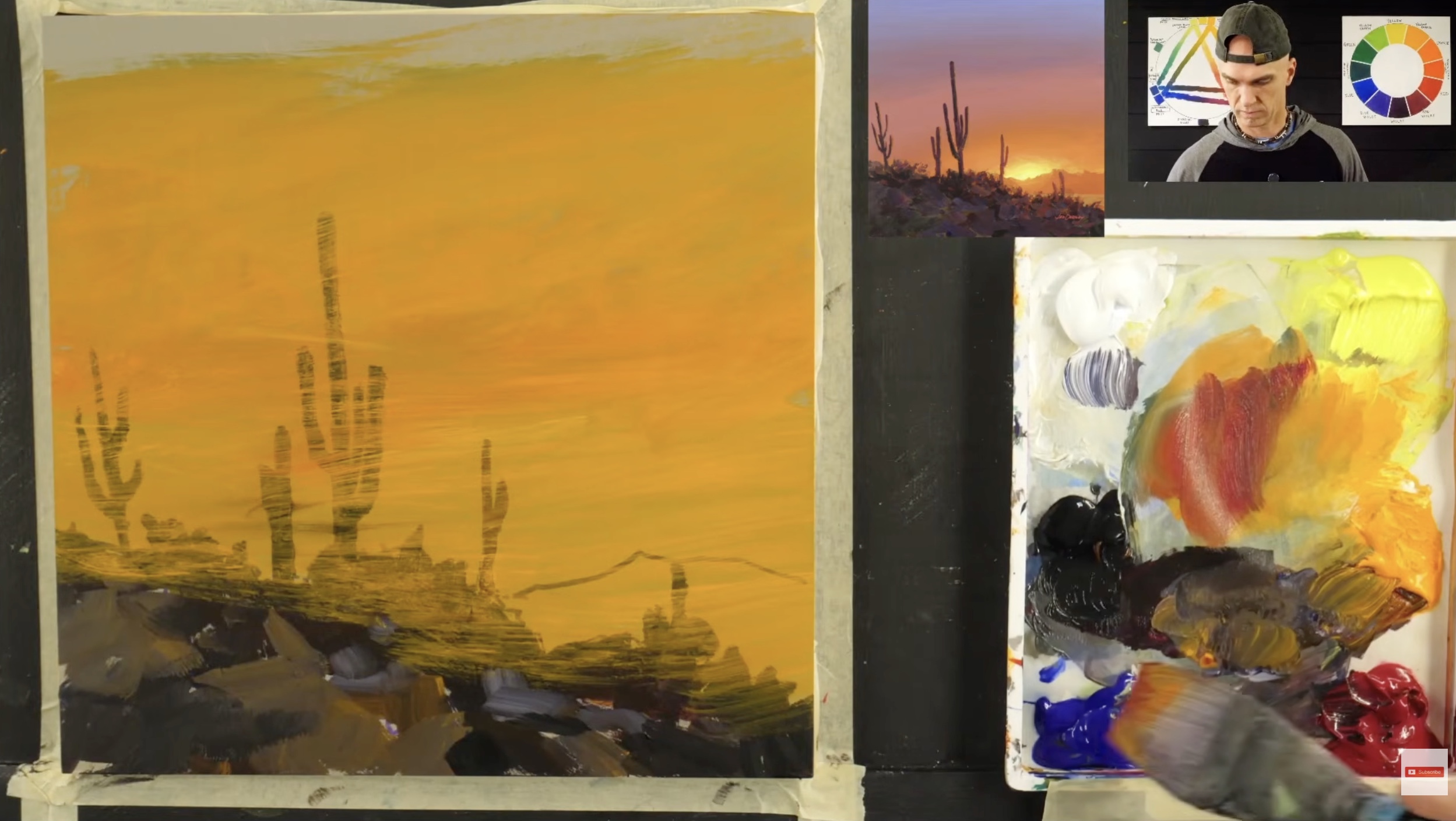
The sky is the highlight of this painting. You’ll create a smooth transition of colors, starting from warm tones near the horizon and gradually moving to cooler tones higher up.
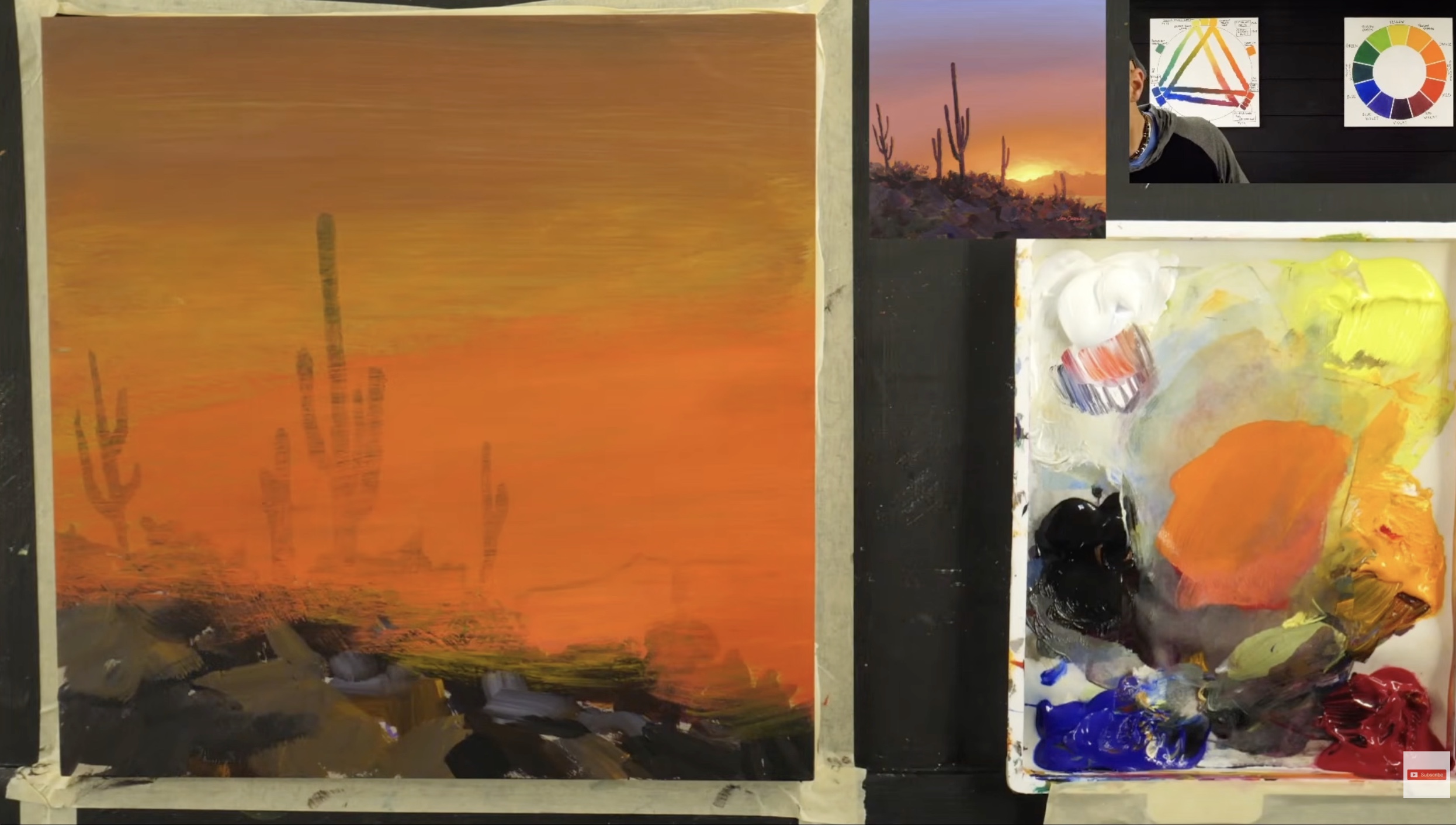
-
Use yellows, oranges, and reds near the bottom
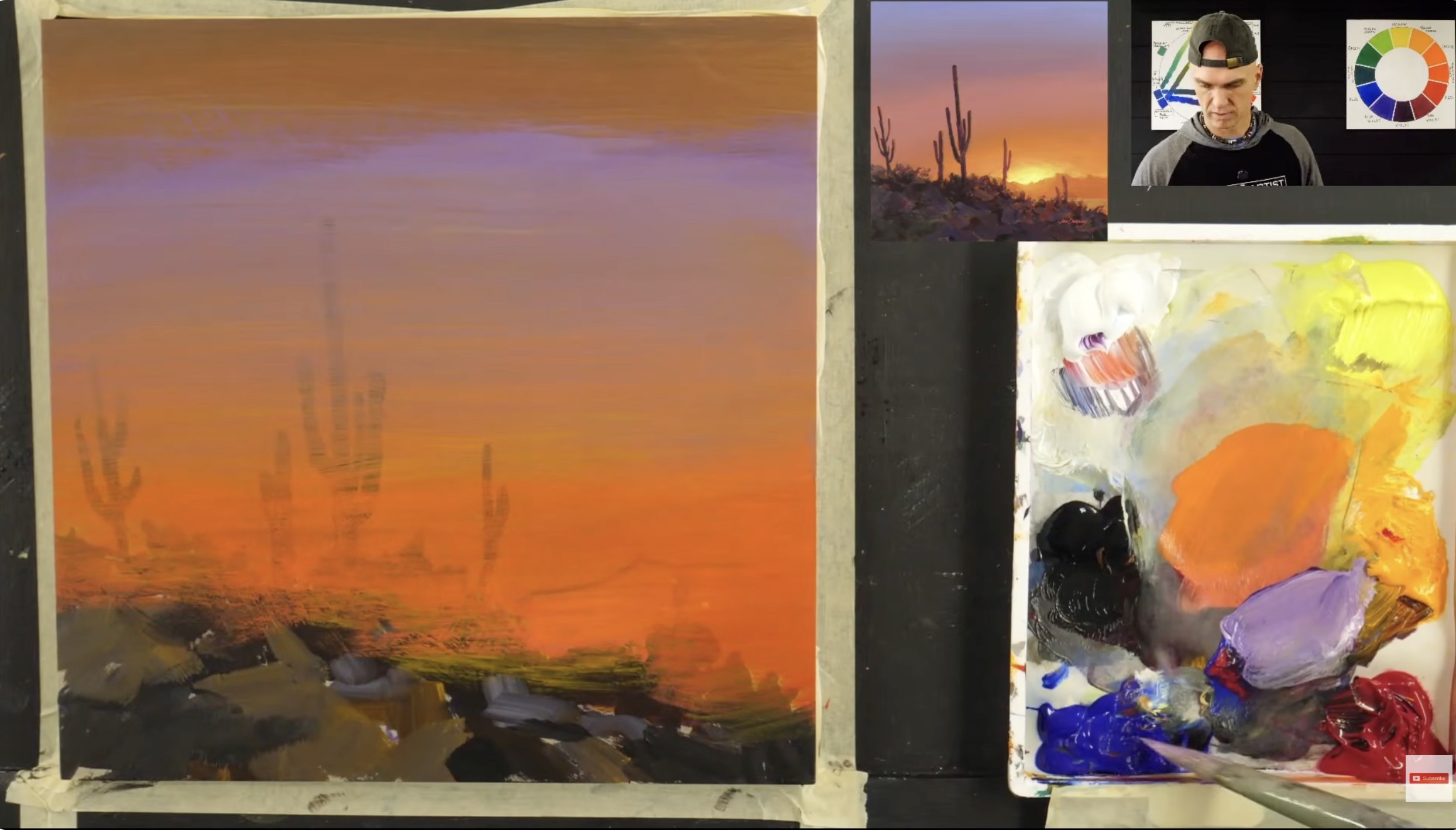
-
Blend into blues as you move upward
Work in layers and blend gently to achieve a soft gradation. This step brings life and vibrancy to your painting.
Step 3: Keep the Foreground Simple
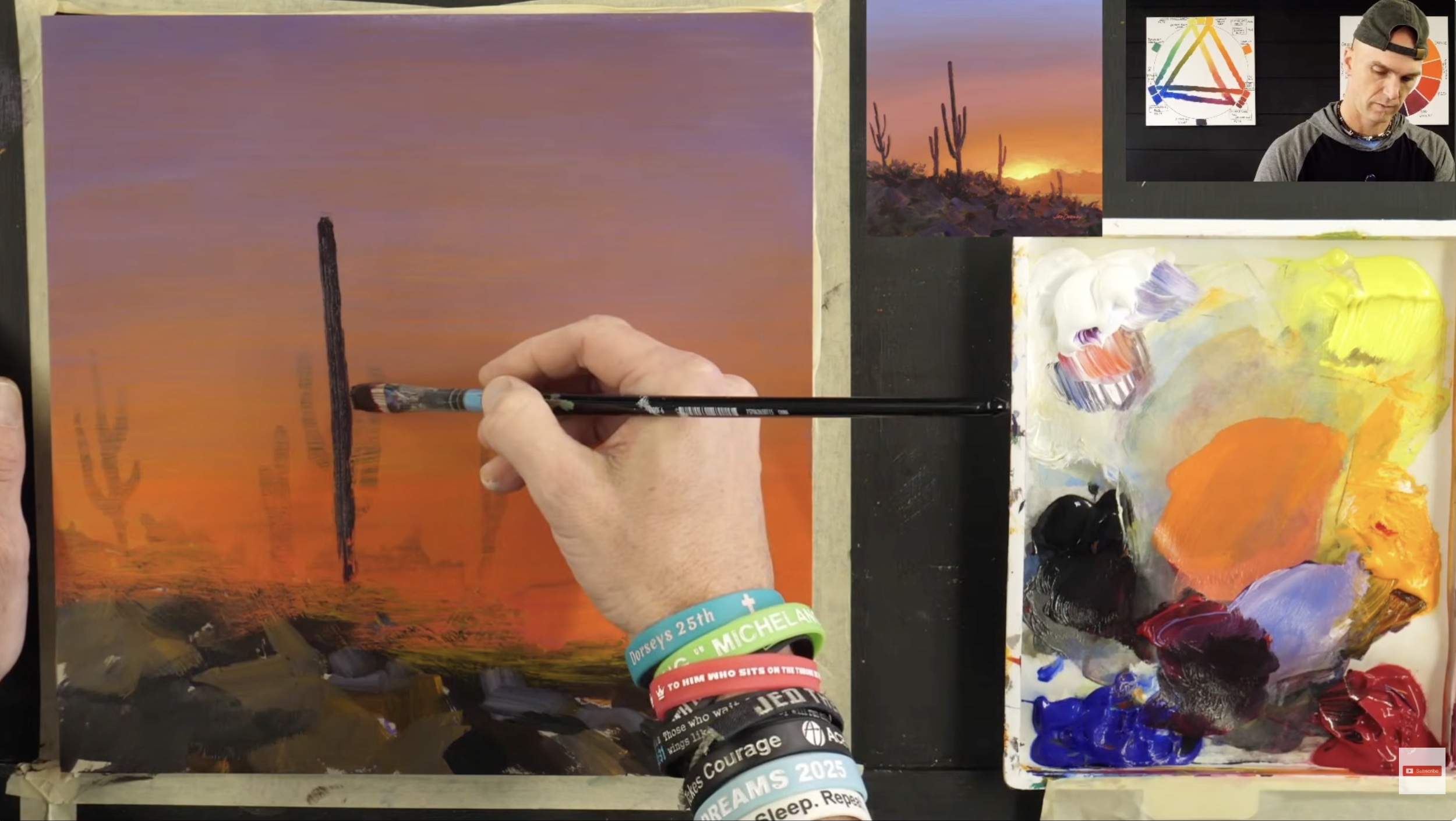
This style relies on silhouette, so the foreground should remain mostly dark. You can add subtle hints of detail, but avoid overworking it.
The contrast between the dark foreground and the luminous sky is what creates the visual impact.
Step 4: Add Finishing Touches
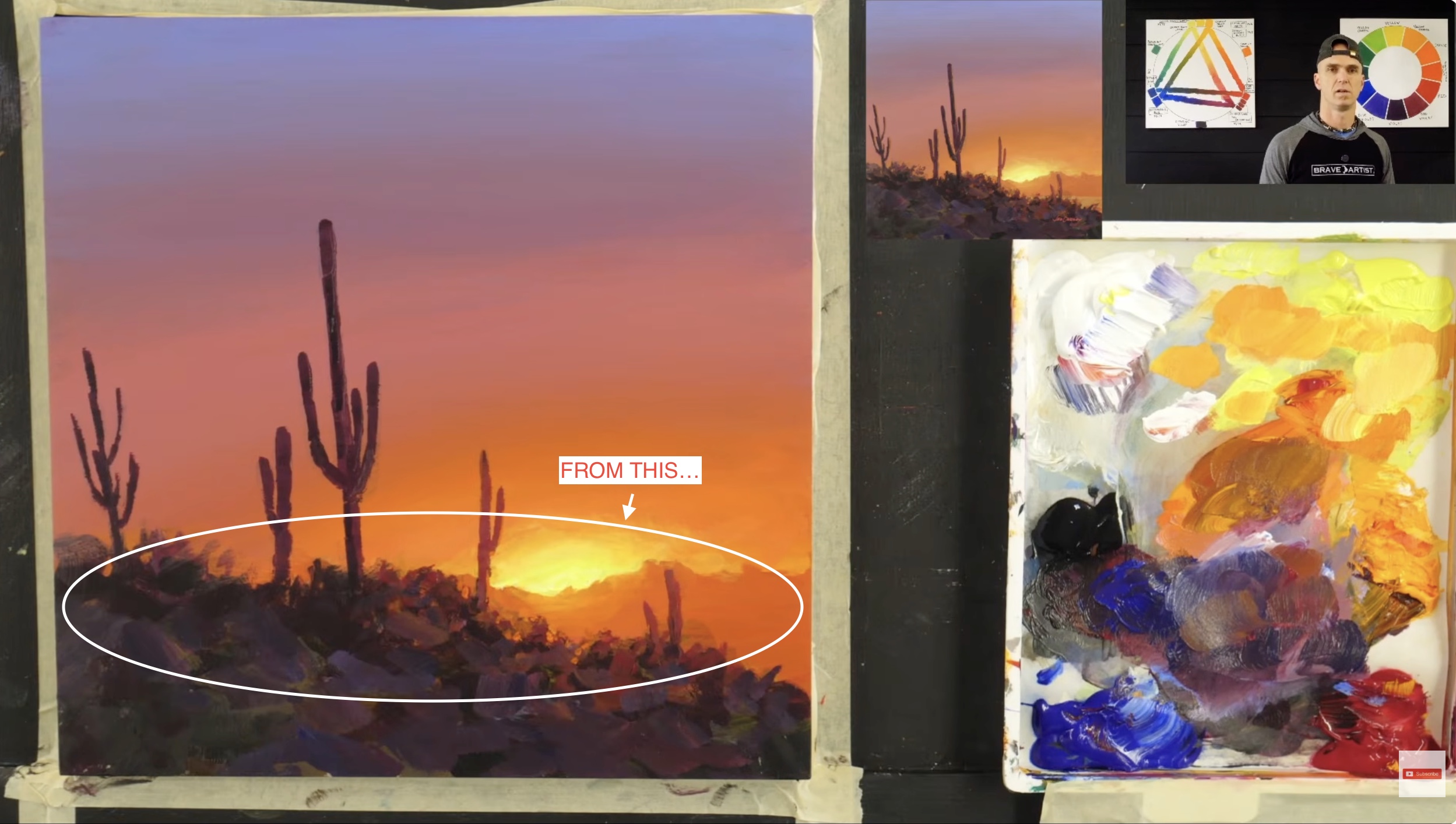
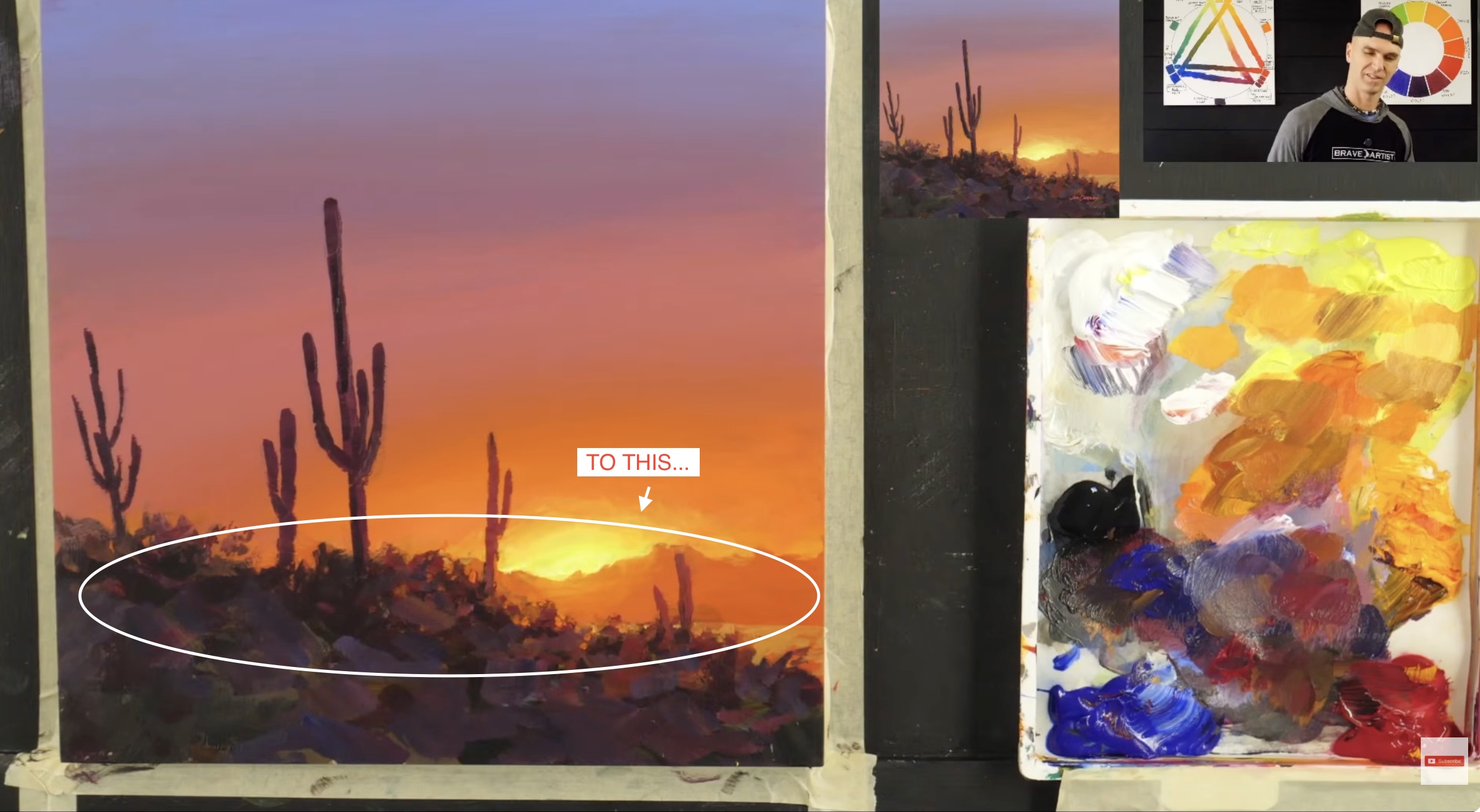
Once your sky is blended and your foreground is set, step back and evaluate your painting. You can:
-
Refine edges of the silhouettes
-
Adjust contrast if needed
-
Add small highlights or textures sparingly
Remember, less is more in this style.
Final Thoughts
This desert scene is a great reminder that beautiful art doesn’t have to be complicated. By focusing on simple techniques—layering, blending, and contrast—you can create a piece that looks both dramatic and professional.
So grab your brushes and enjoy the process. Painting should be fun, relaxing, and expressive—and this project is a perfect place to start.